F4IOZ's station in JN18FS — crossed satellite antennas, VHF/UHF transceivers, portable satellite operating, HF, and SatMe.
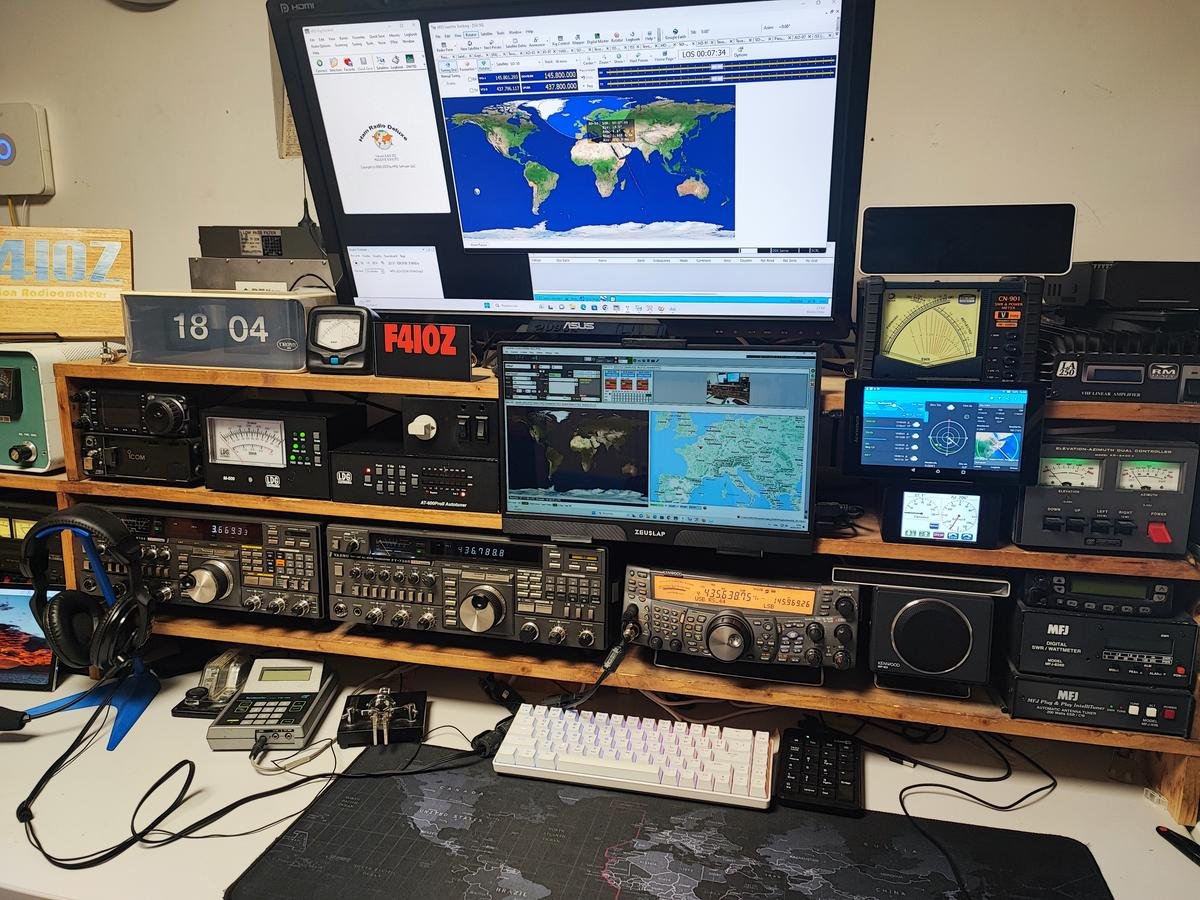
The operating position: the satellite and HF transceivers on their shelves, the tracking PC above, the key and the keyboard in front
My QTH is in JN18FS, in the Paris area. The station is first of all geared to amateur radio satellites, at home as well as portable, without forgetting HF. It is driven by SatMe, the satellite tracking application I develop.
Click a photo to enlarge it; the arrows (or a swipe) move on to the next one.
VHF / UHF antennas
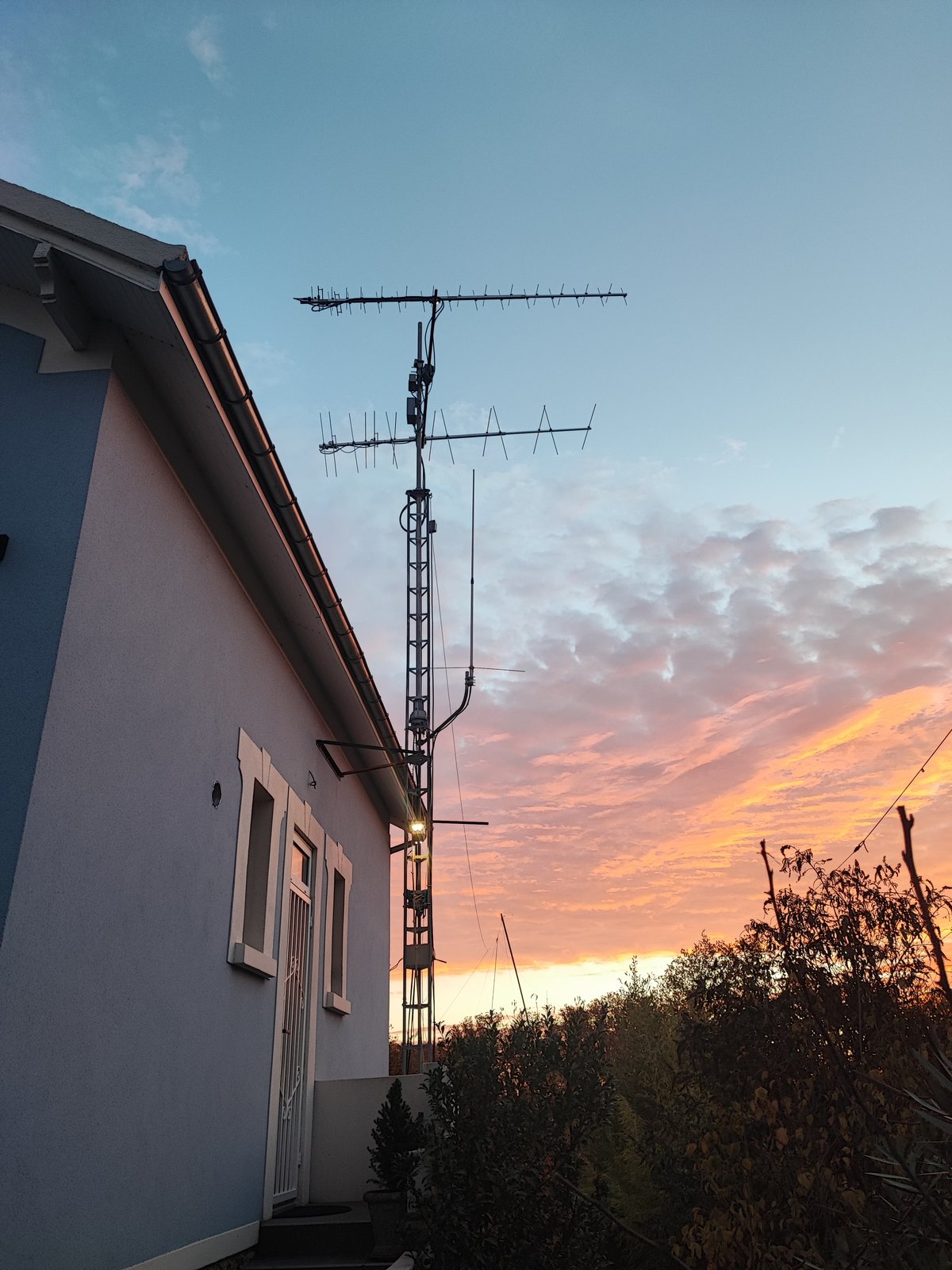
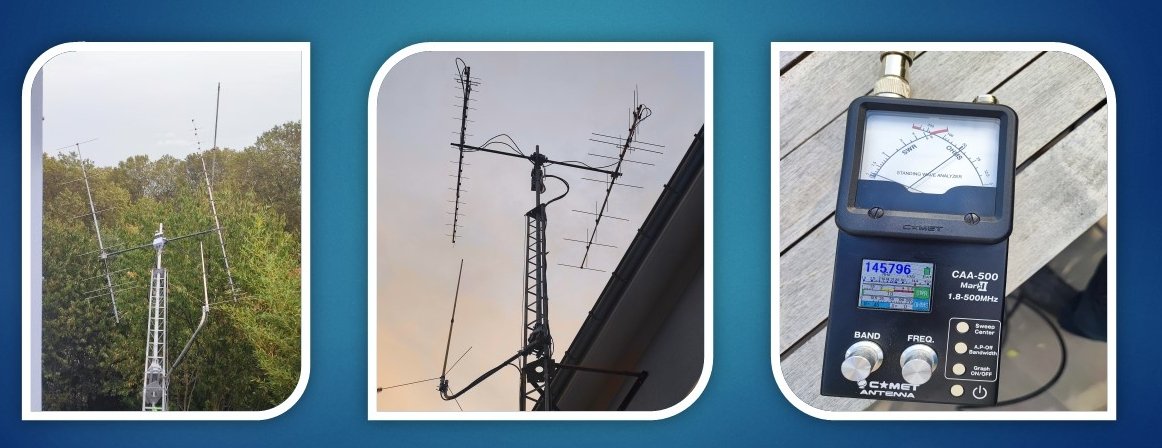
The tower and its antennas at daybreak, in November 2025
Diamond X300 — dual-band 2 m / 70 cm collinear.
Big LEO UHF, 30 elements — 15 elements in horizontal polarisation and 15 in vertical polarisation.
Big LEO VHF, 14 elements — 7 elements in horizontal polarisation and 7 in vertical polarisation.
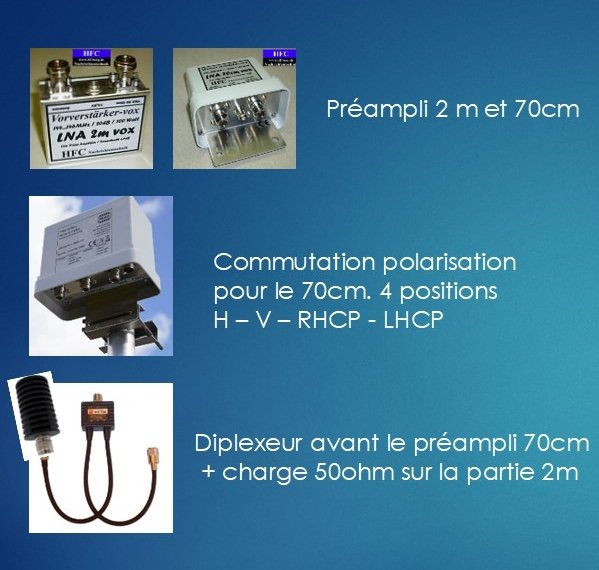
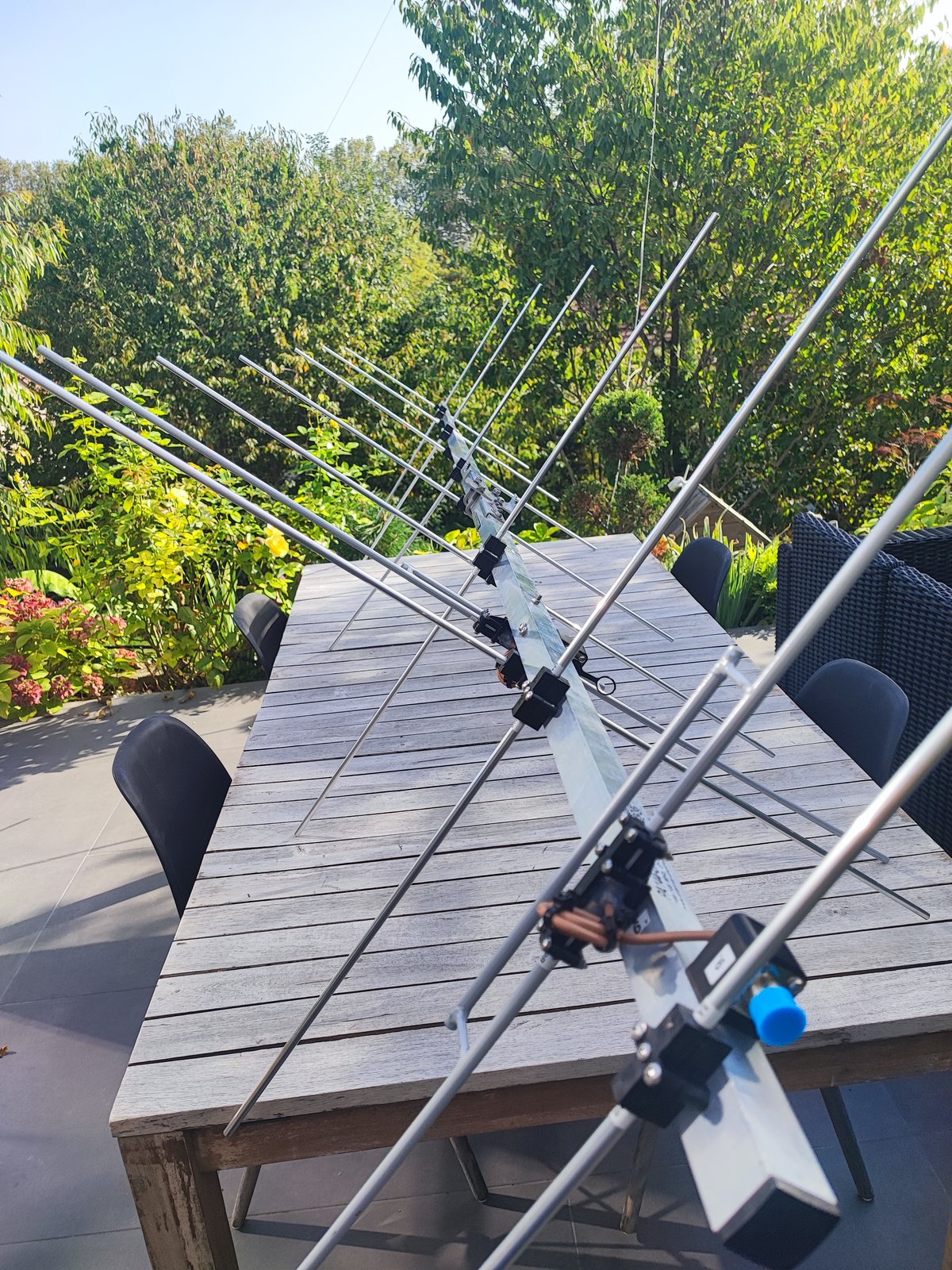
Right at the antennas: a preamp for 2 m and one for 70 cm, a four-position polarisation switch for 70 cm (H, V, RHCP, LHCP), and a diplexer ahead of the 70 cm preamp, with a 50 Ω load on the 2 m port.
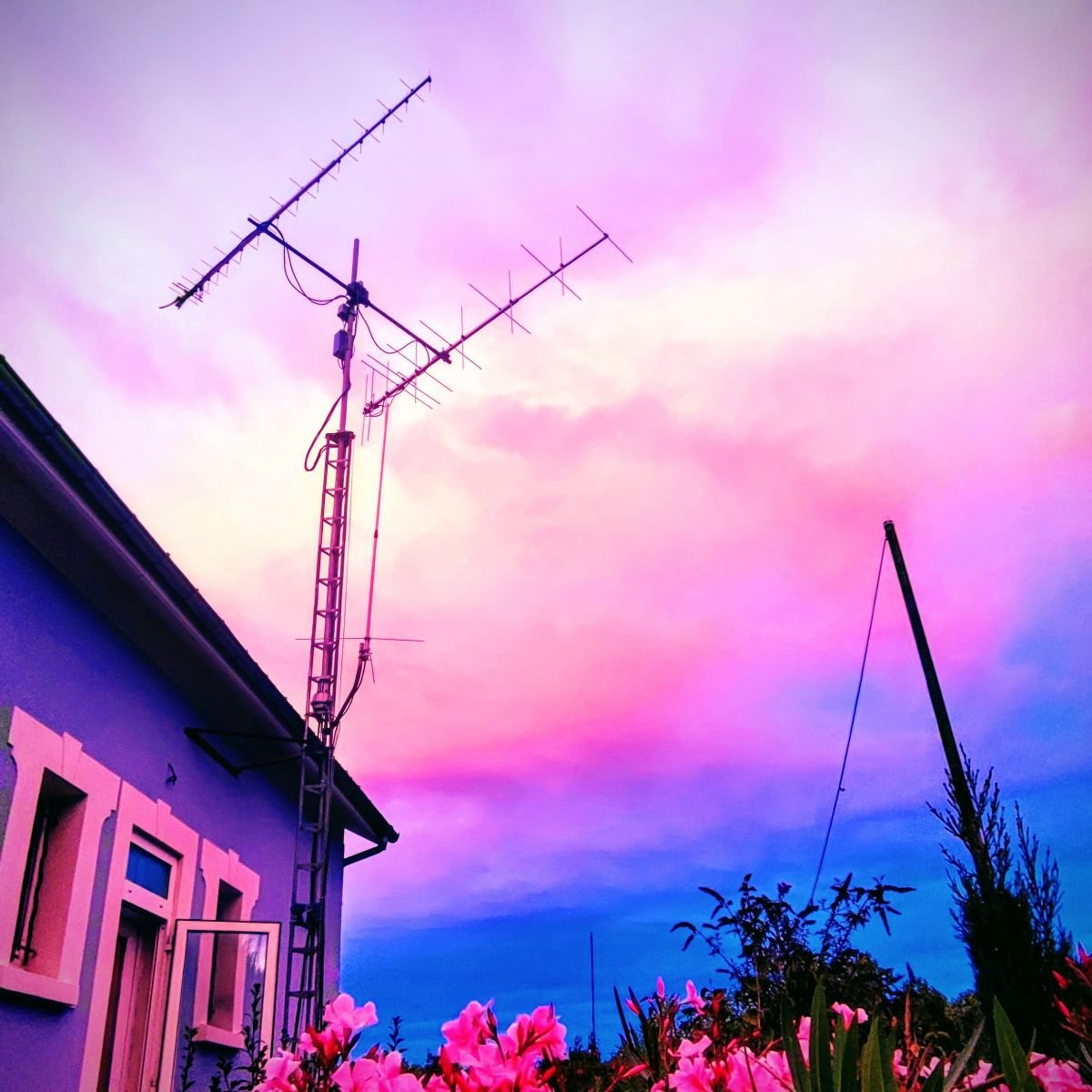
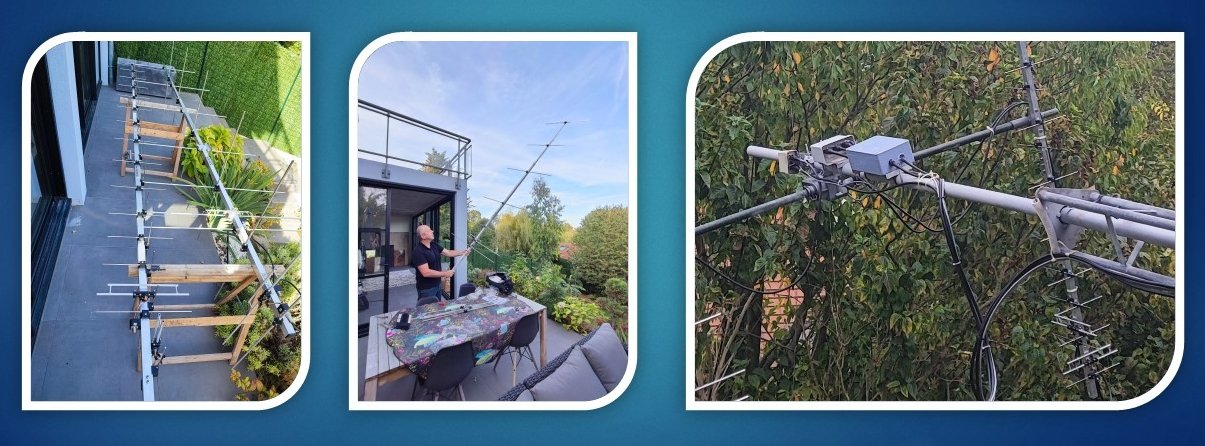
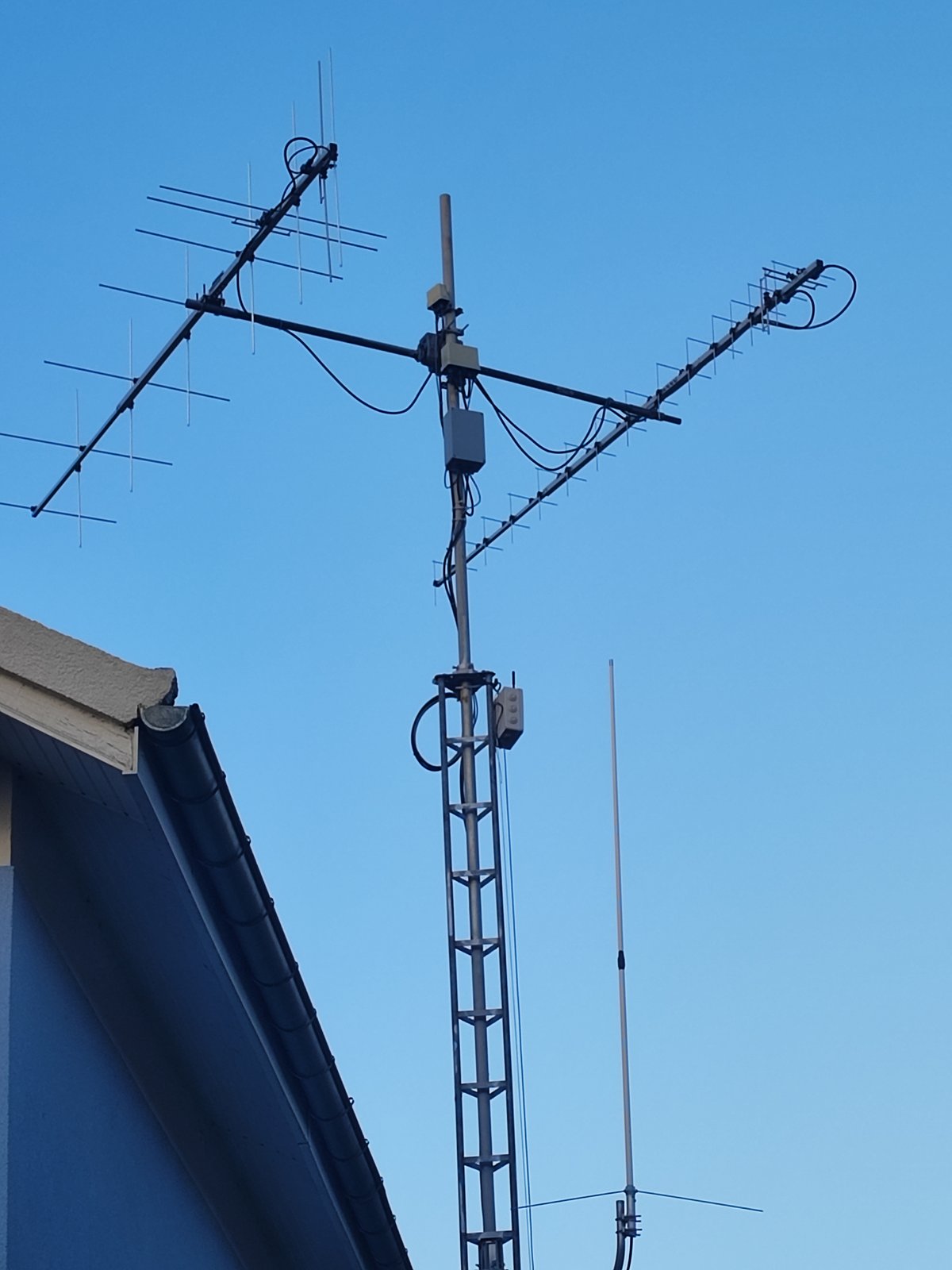
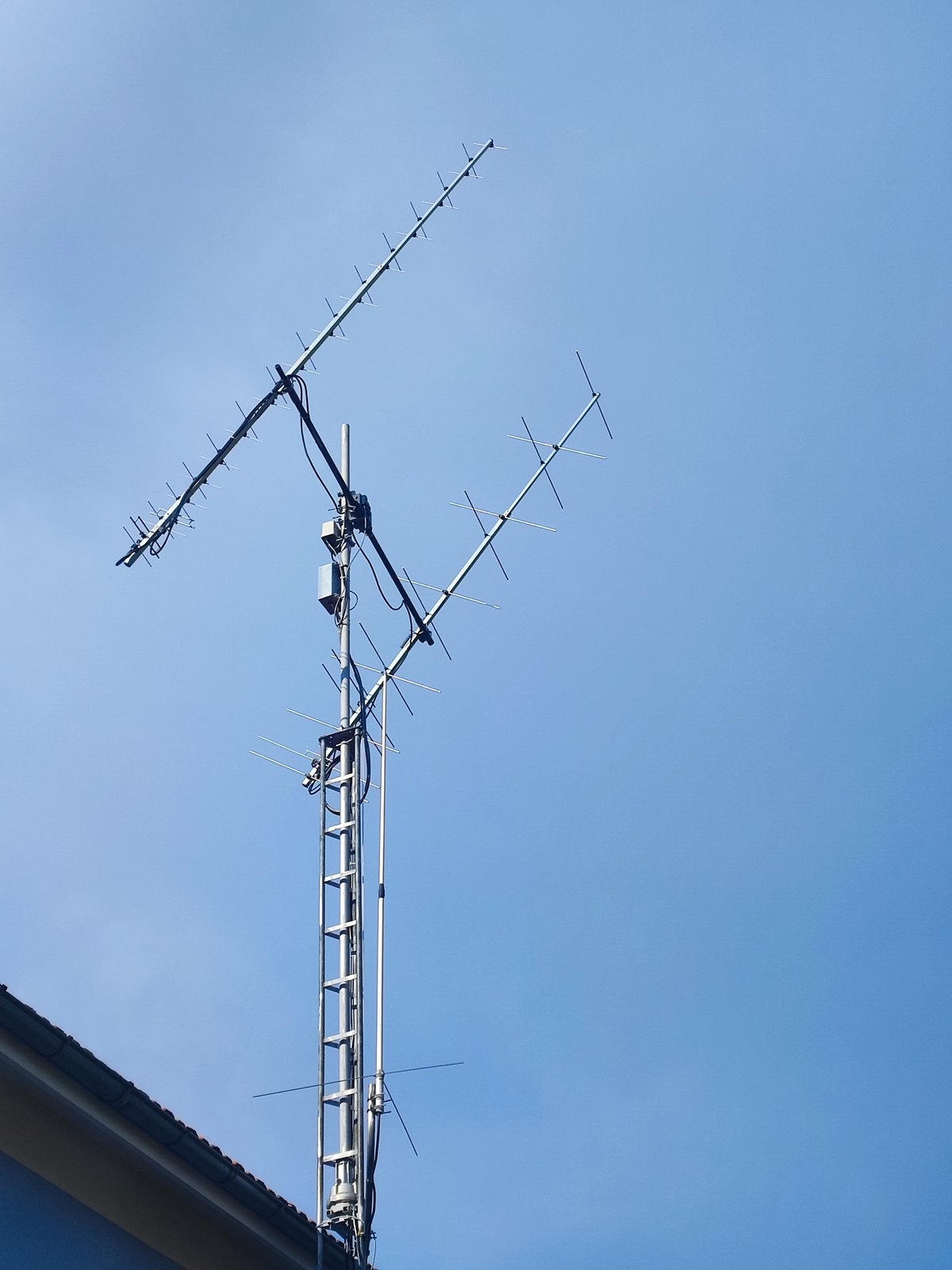
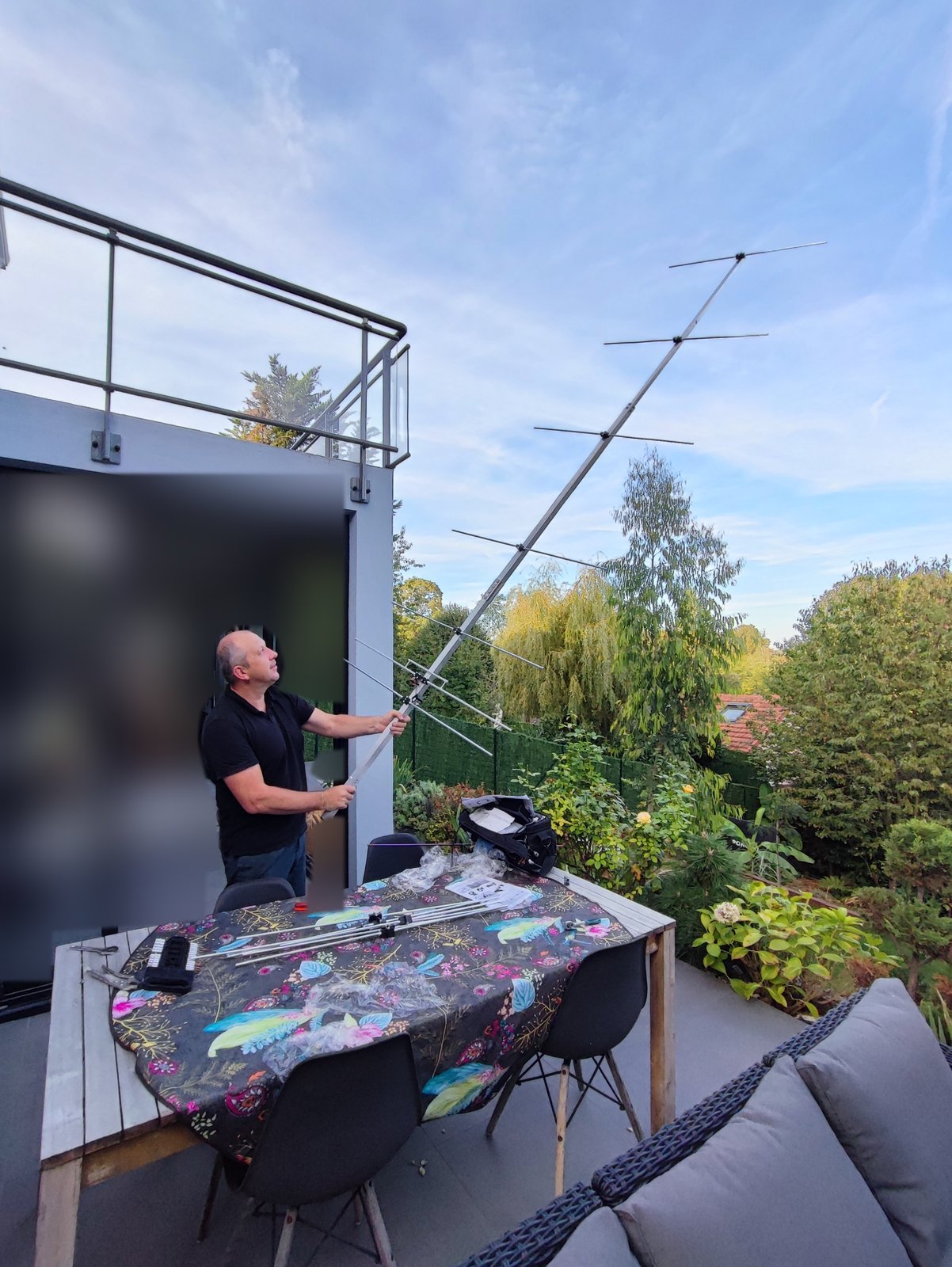
The satellite antennas above the house (retouched photo)The build: the crossed antennas assembled on the terrace, putting them up, the boxes on the boomThe tower and its antennas, and tuning with the Comet CAA-500 Mark II antenna analyserThe 2 m and 70 cm preamps, the polarisation switch (H, V, RHCP, LHCP) and the diplexer with its 50 Ω loadThe top of the tower in April 2025: the VHF and UHF crossed Yagis, the boxes under the cross-boom, the collinear beside themThe tower in May 2024: the two crossed Yagis and the collinear, under a blue skyBuild, October 2023: a crossed Yagi assembled on the terrace tableBuild, October 2023: a Yagi held at arm's length on the terrace, the parts spread out on the table
Satellite, at the station
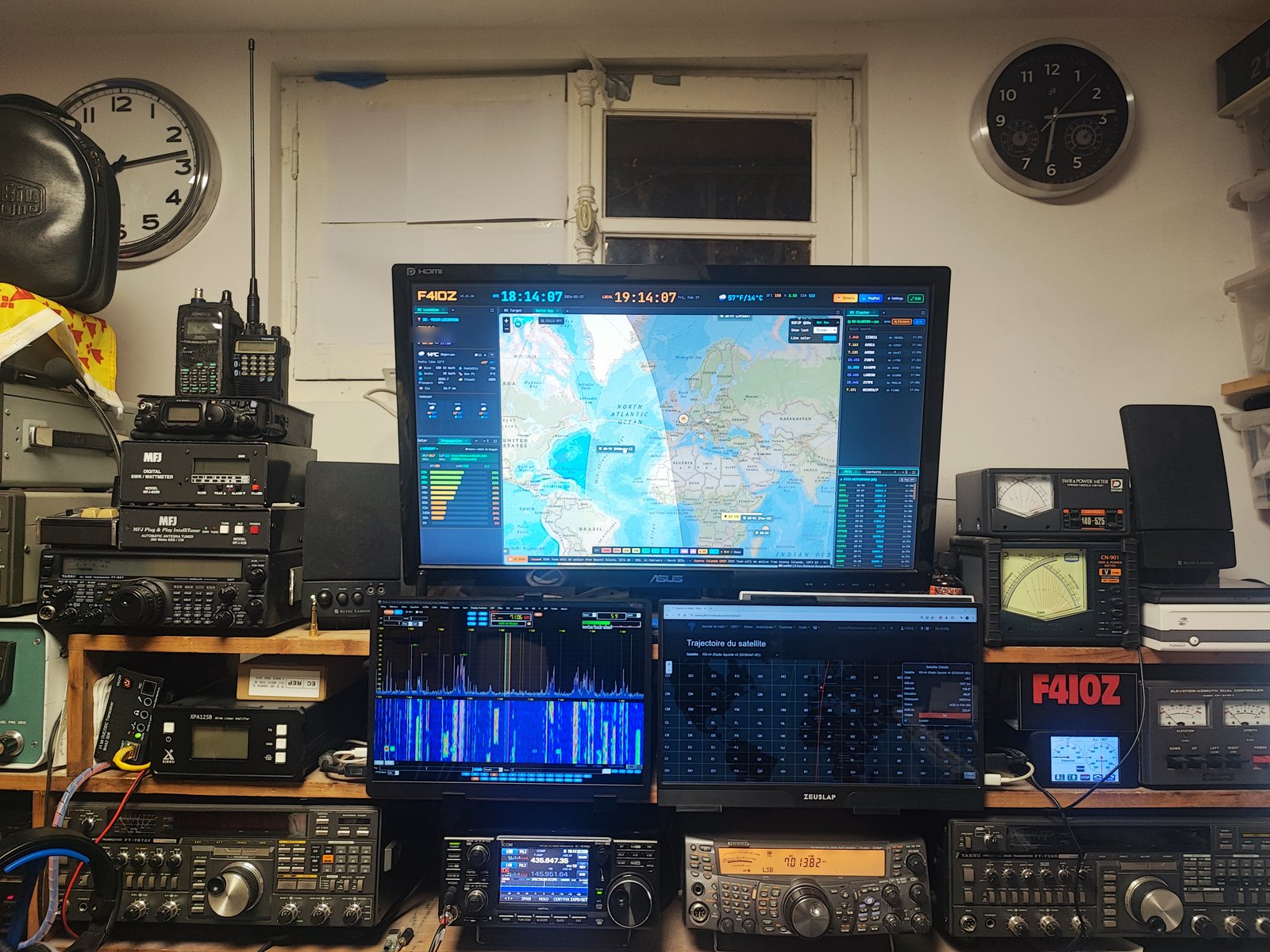
Icom IC-9700 — 2 m / 70 cm / 23 cm
Kenwood TS-2000 — 2 m / 70 cm / 23 cm
Yaesu FT-736 — 2 m / 70 cm / 23 cm
Yaesu FT-847
The operating position in February 2026: the tracking map on the big screen, an SDR waterfall and a satellite's track on the two small ones, the transceivers below
Satellite, portable
2 × Yaesu FT-817
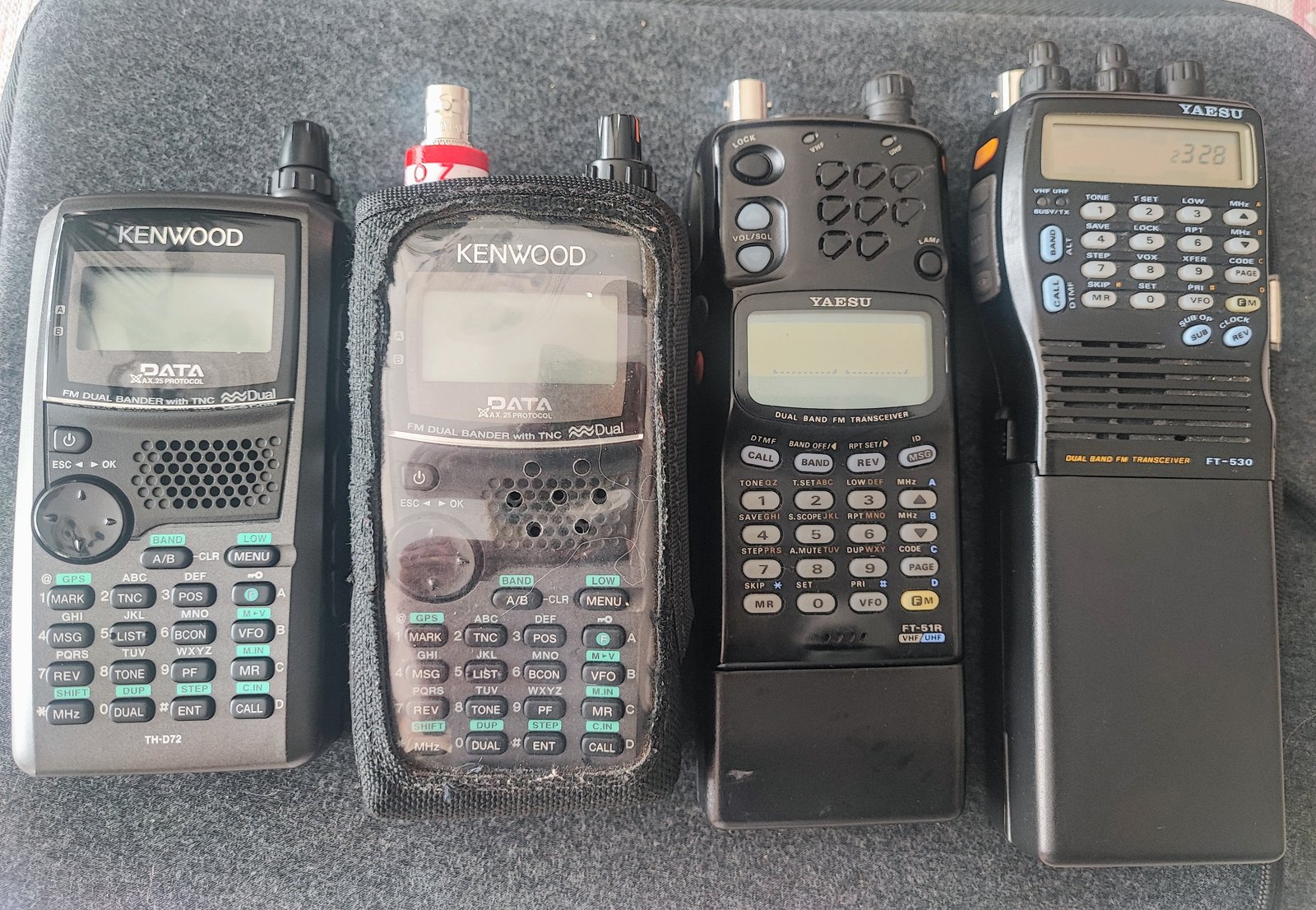
2 × Kenwood TH-D72
Yaesu FT-51R
Yaesu FT-530
The handhelds: two Kenwood TH-D72 (one in its case), a Yaesu FT-51R and a Yaesu FT-530
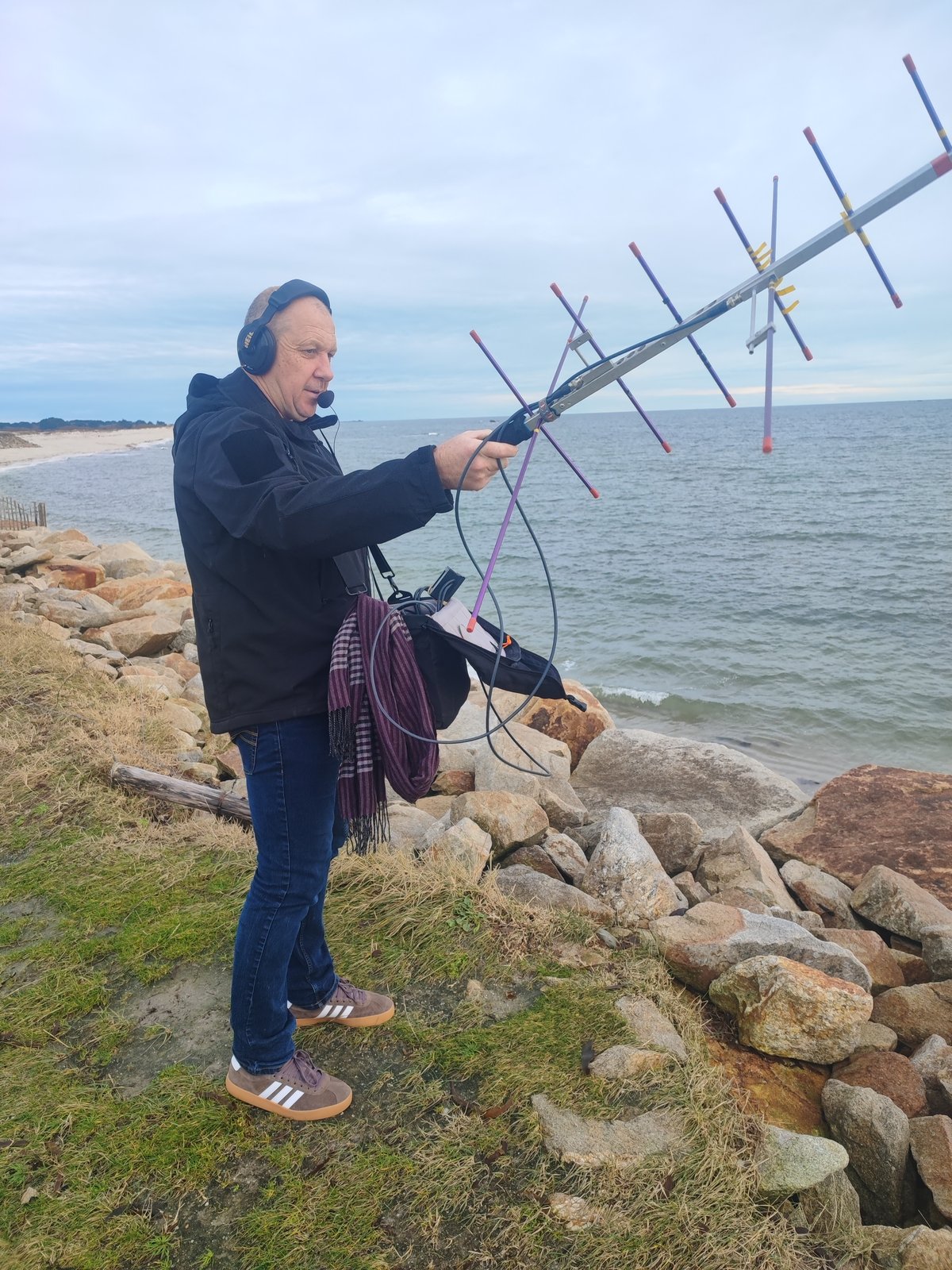
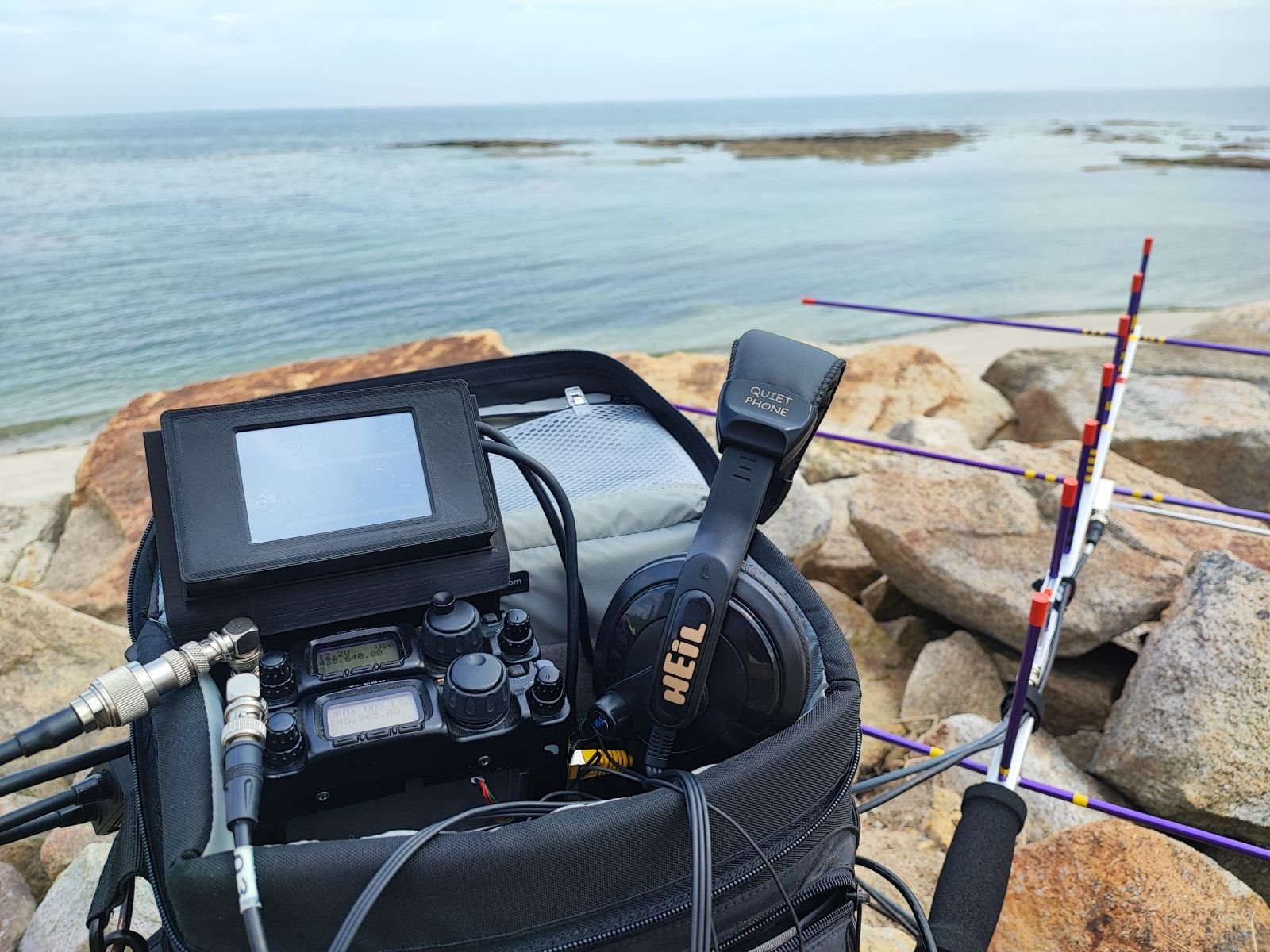
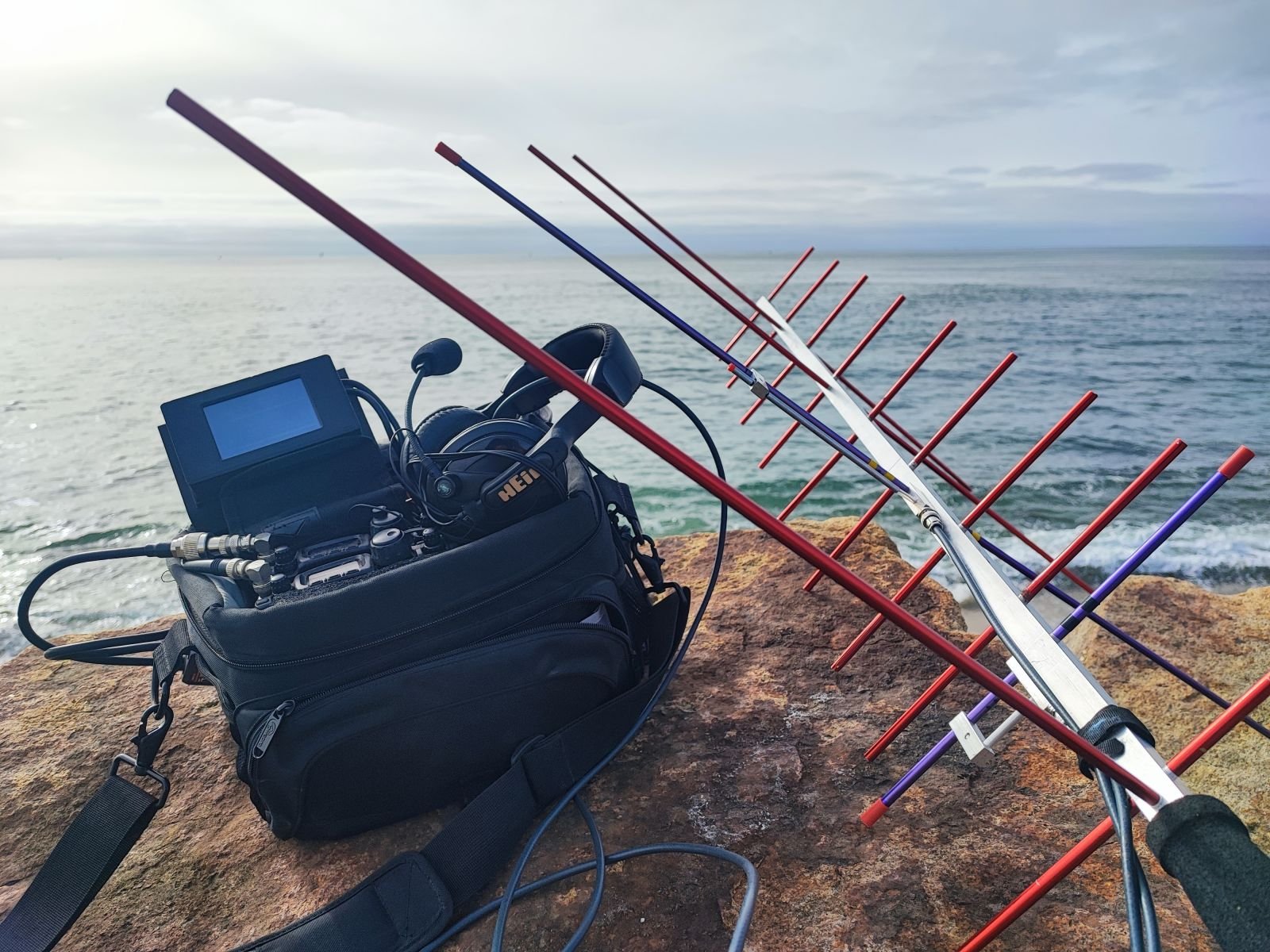
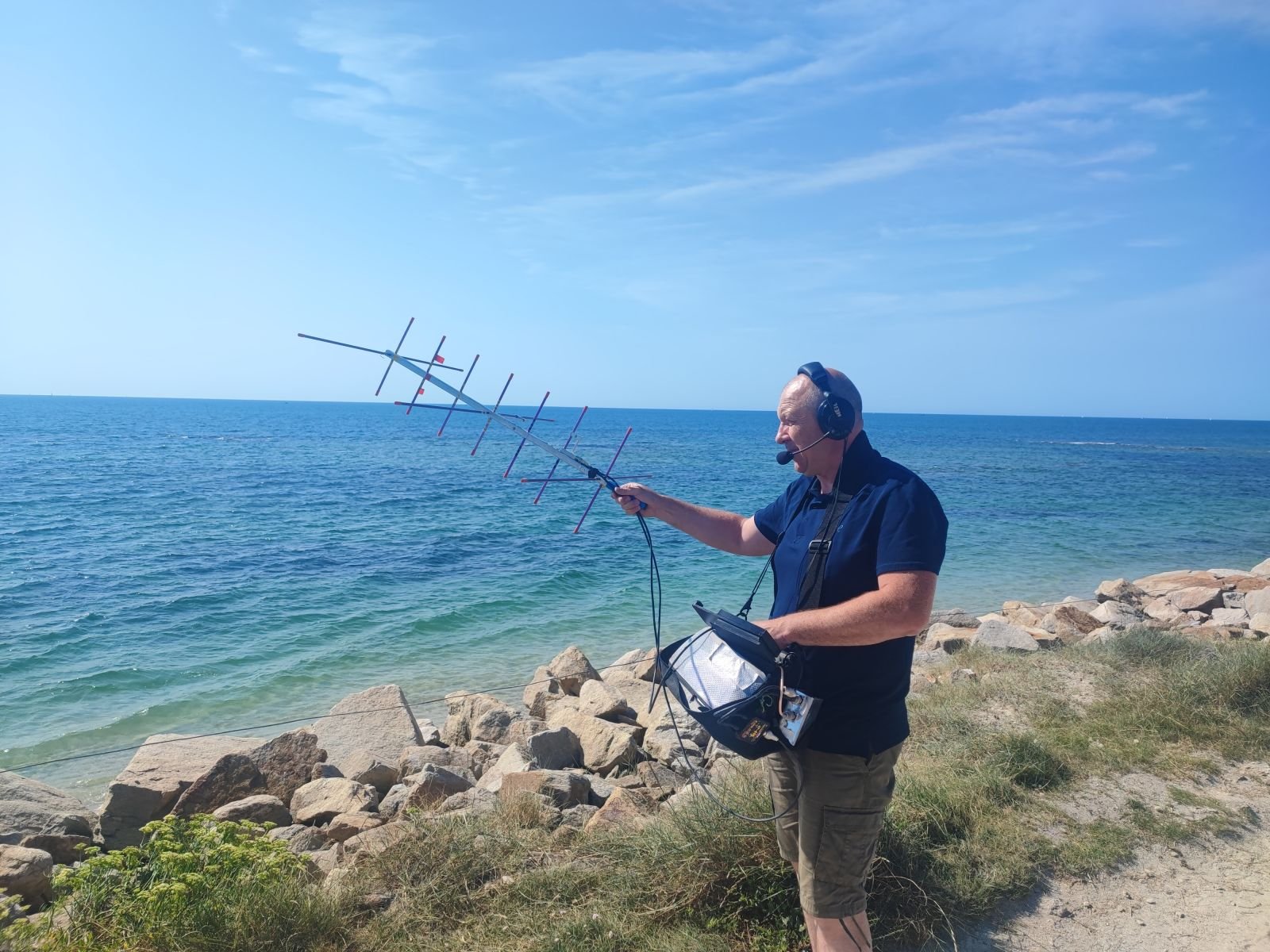
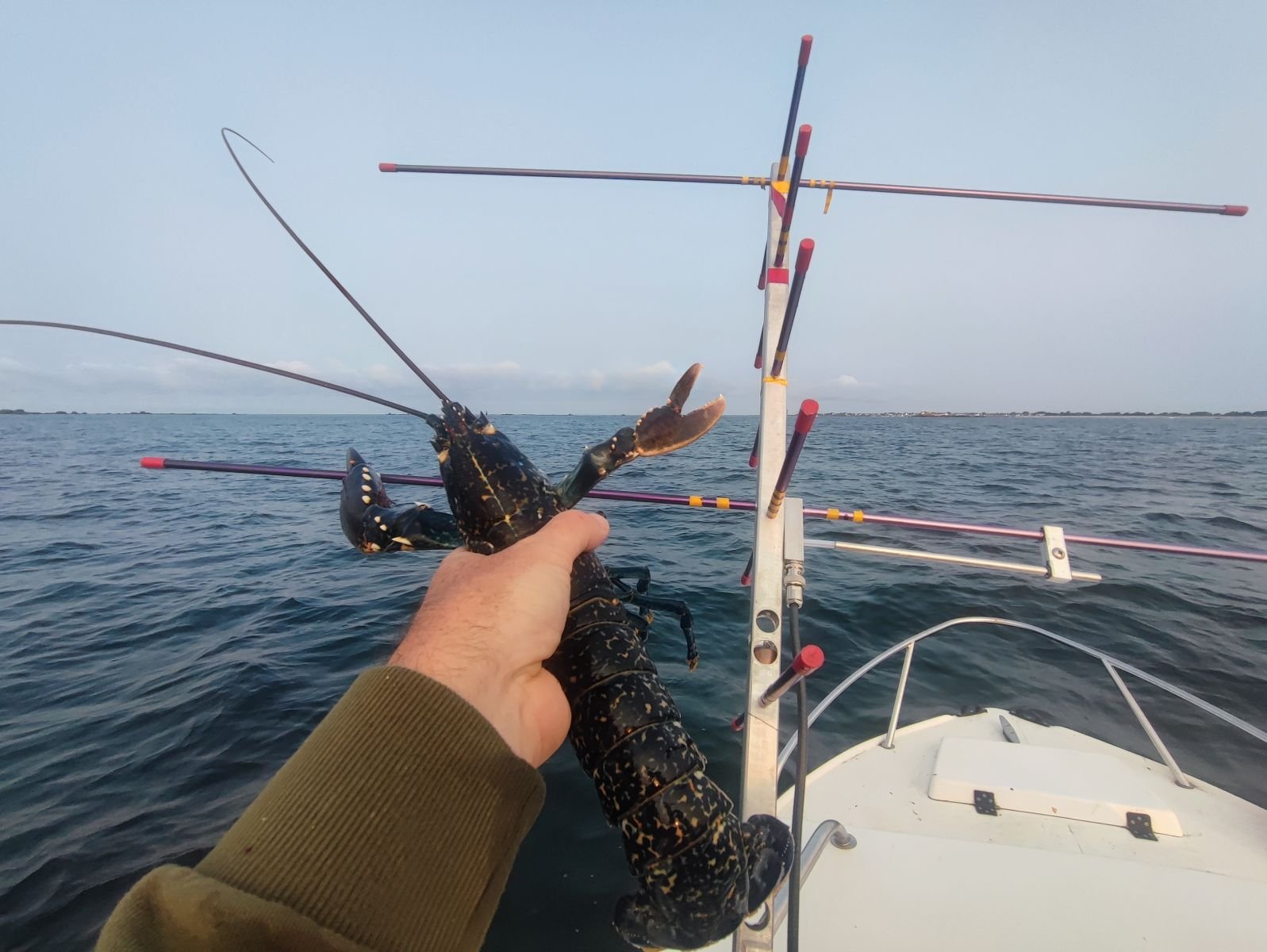
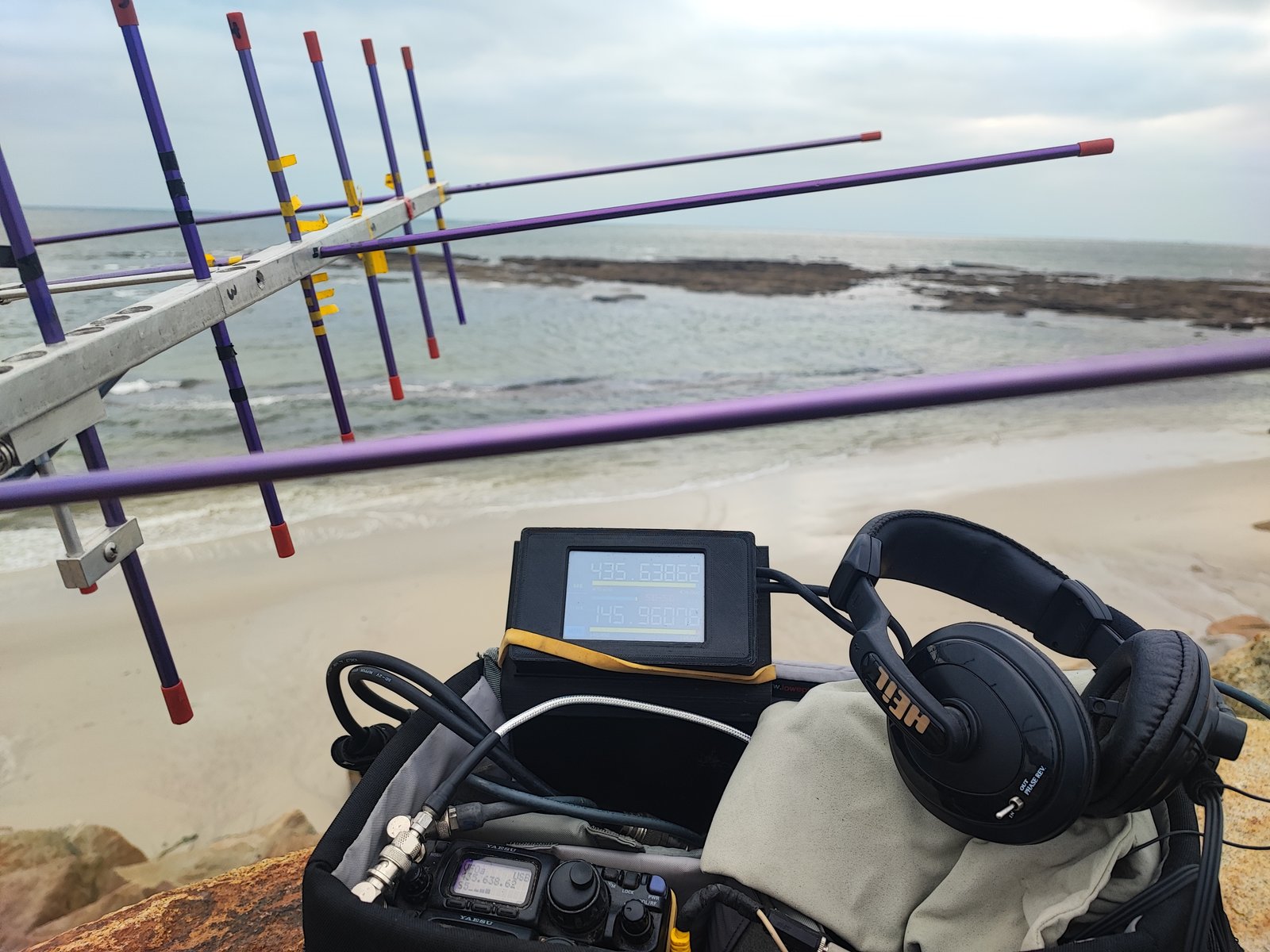
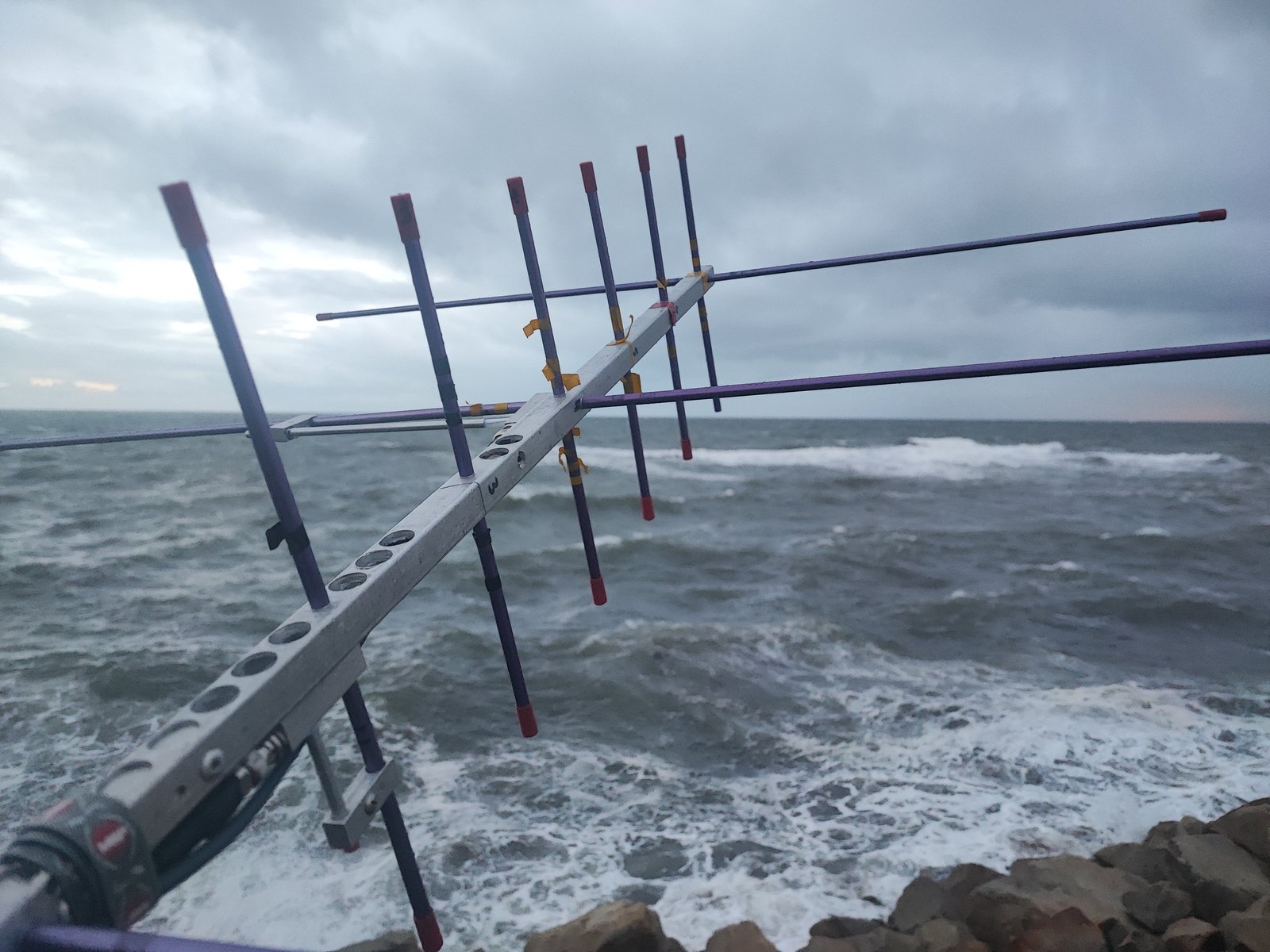
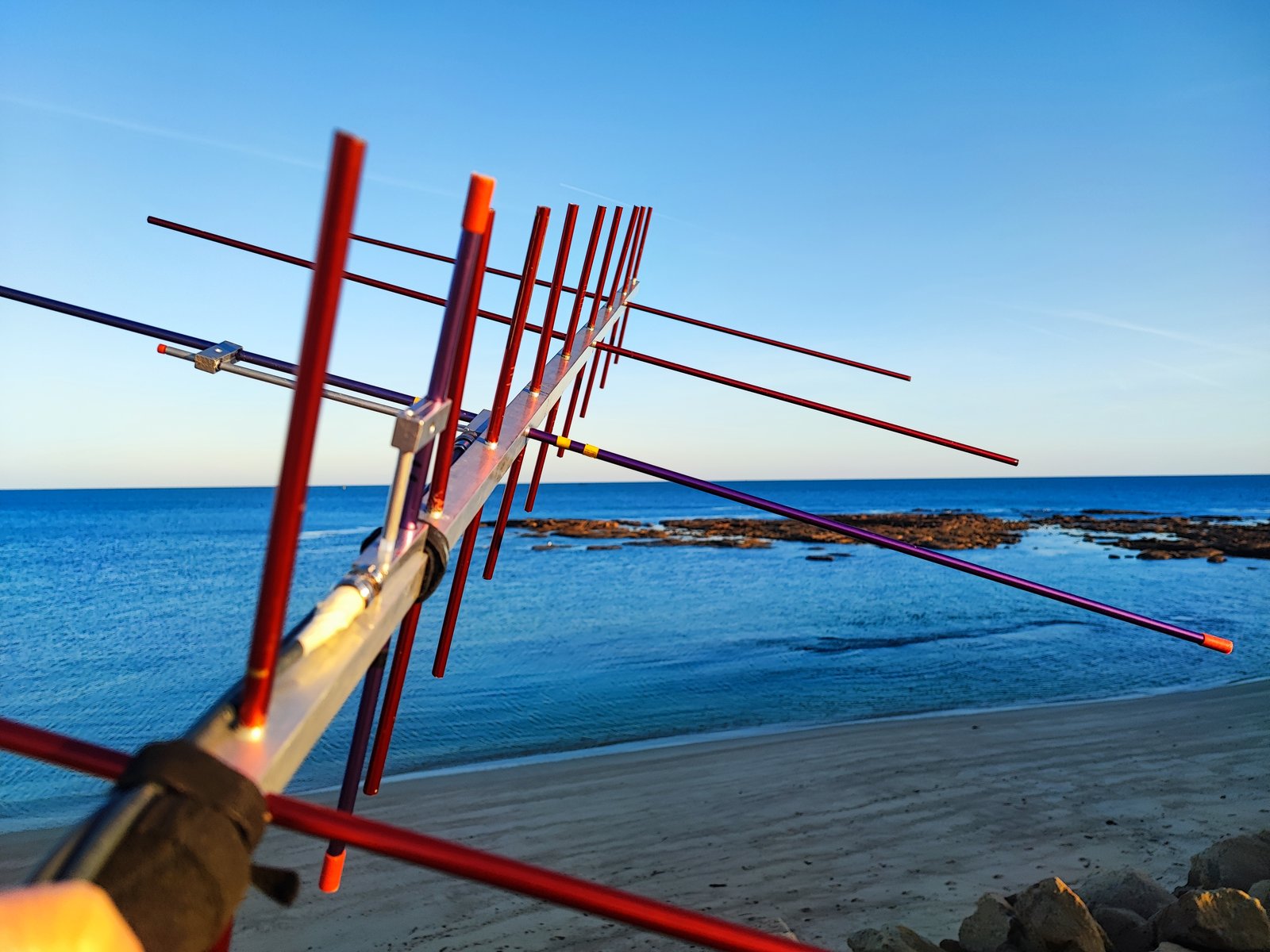
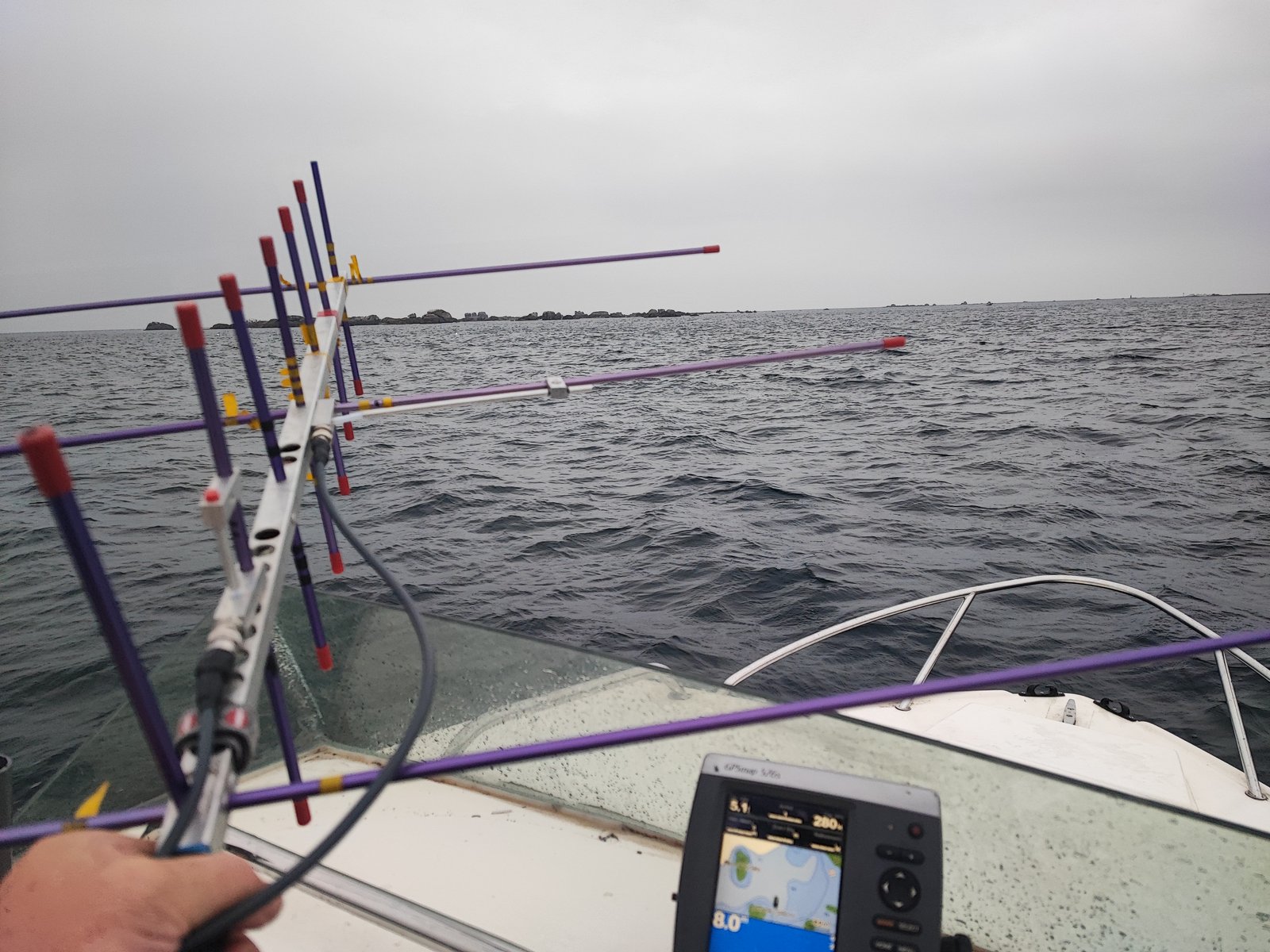
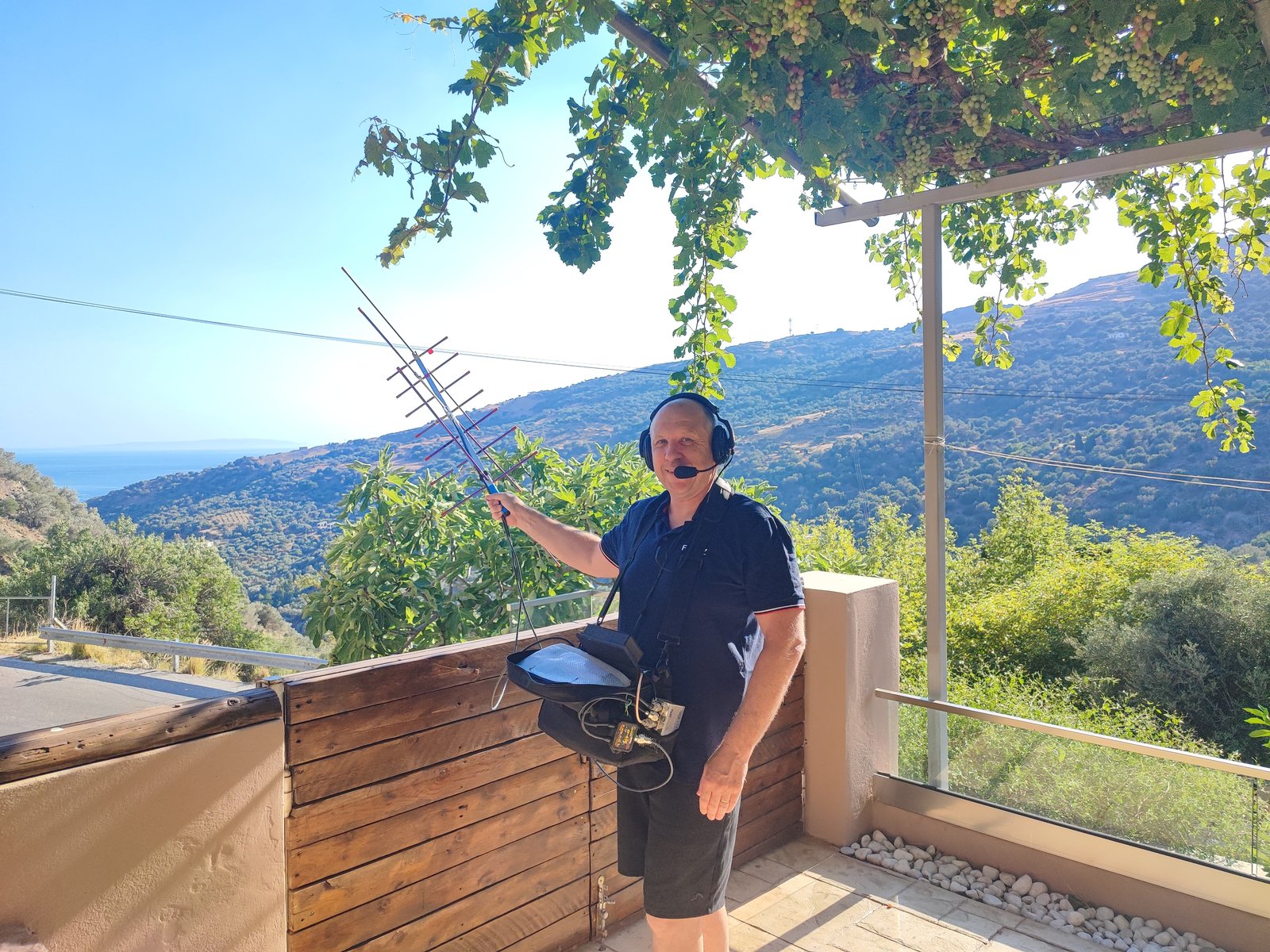
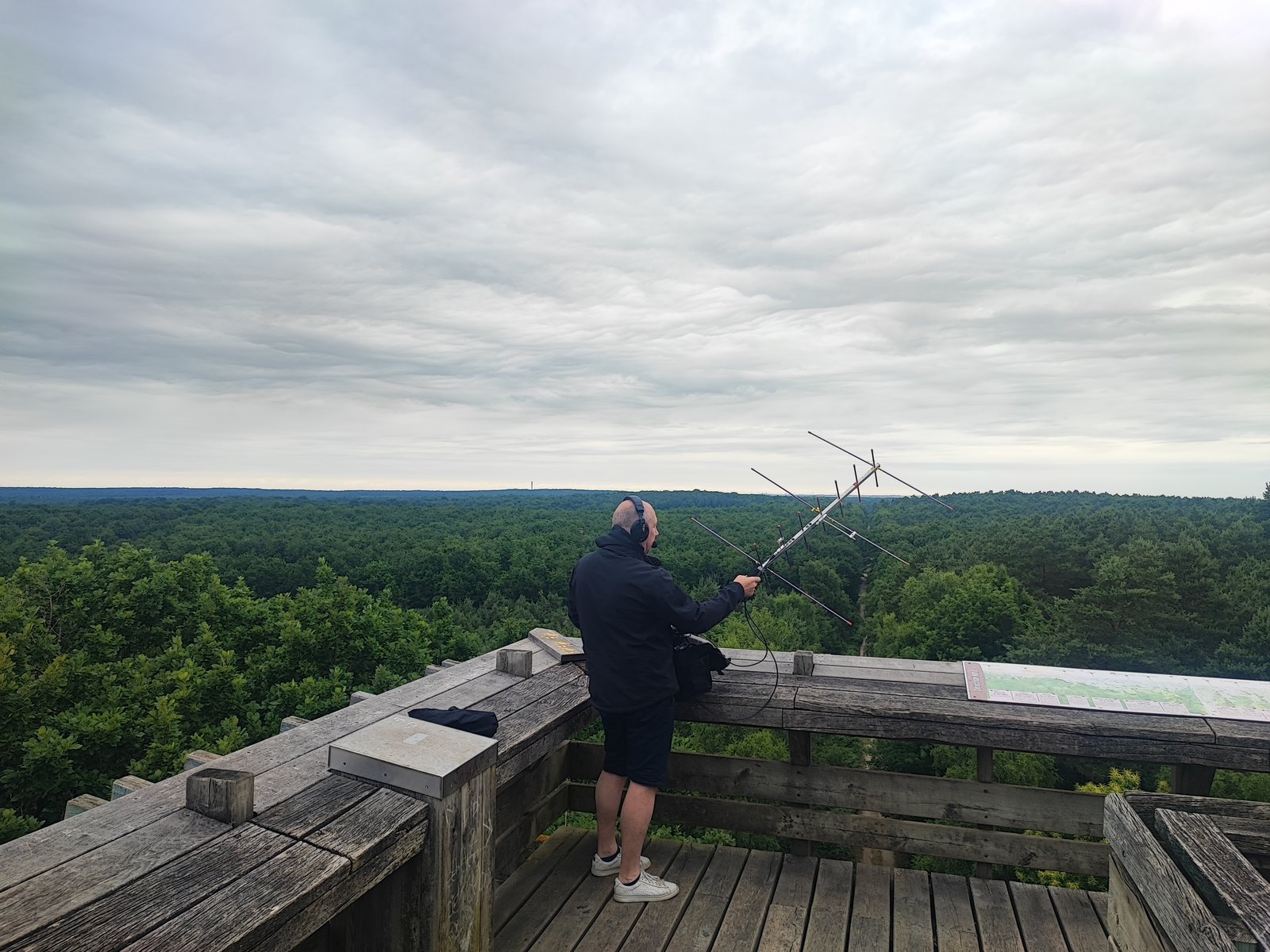
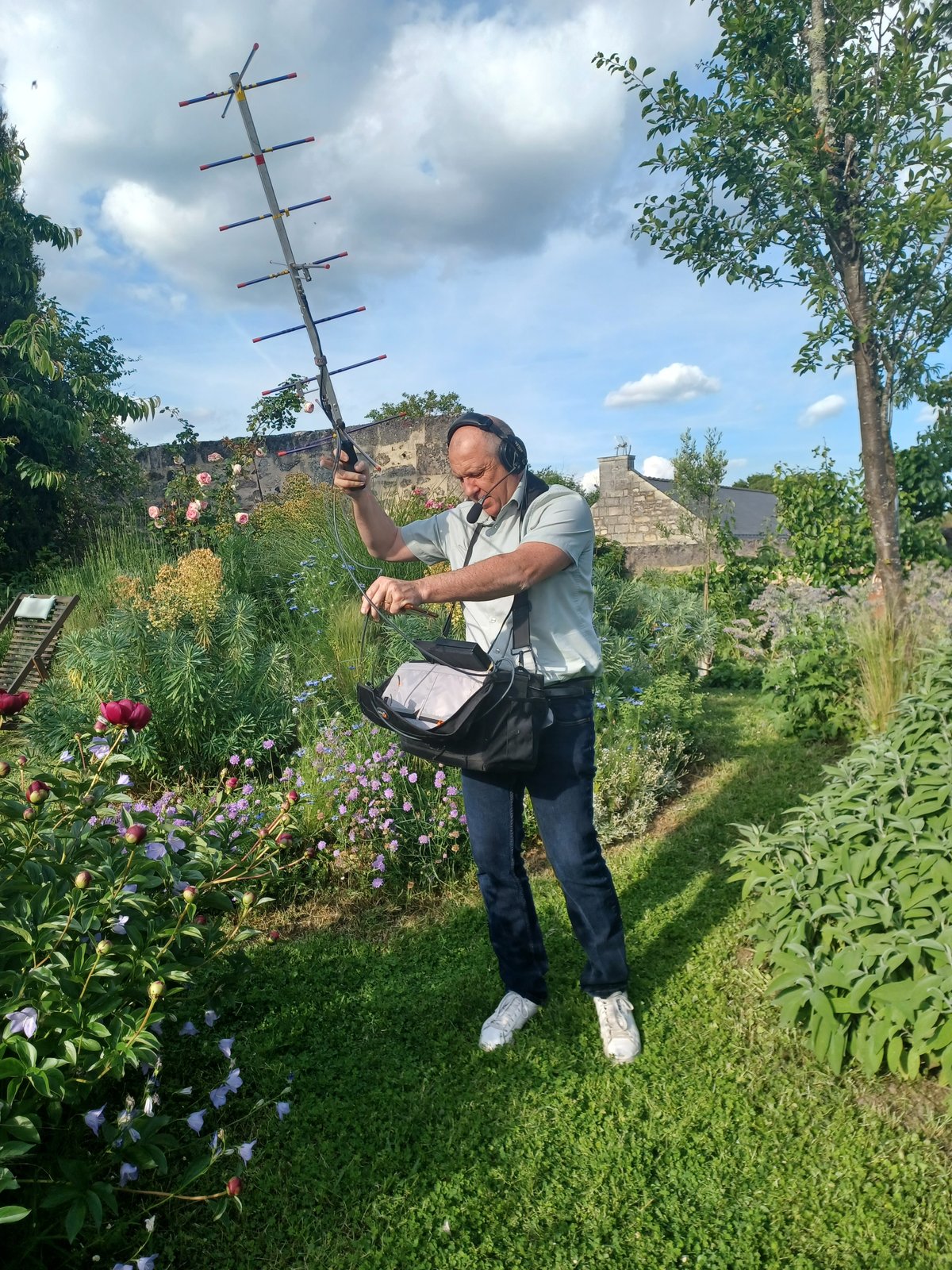
Portable, the station fits in a shoulder bag, with a hand-held crossed Yagi: by the sea, on the rocks, and even on a boat.
Working satellites on the rocks, facing the sea, the crossed Yagi in hand and the bag over the shoulder — December 2025
By the water
The portable station in its bag, by the seaThe bag and the crossed Yagi, on the rocksWorking satellites by the sea, the Yagi in hand, the bag over the shoulderAt sea: the satellite antenna on the boat… and a lobsterThe bag open on the beach: the FT-817, a small screen showing the 435 and 145 MHz frequencies, the Heil headset, and the crossed Yagi — December 2025The crossed Yagi facing a rough sea, on the rocks — December 2025The crossed Yagi facing the sea, on the beach, late in the day — April 2024On a boat, the crossed Yagi in hand at the bow, islets in the distance — August 2025
At the bow of the boat, Yagi in hand — 9 s
Elsewhere
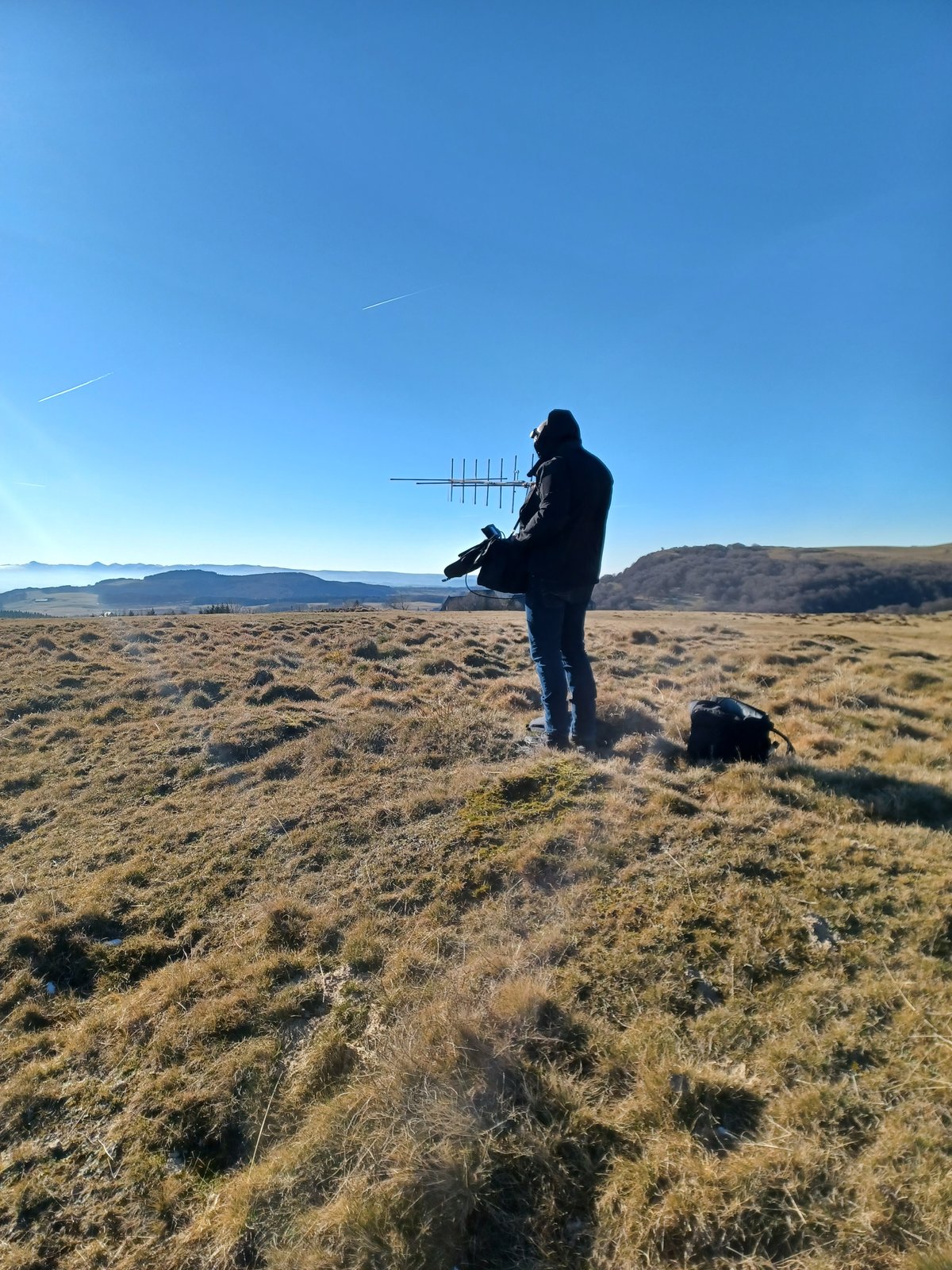
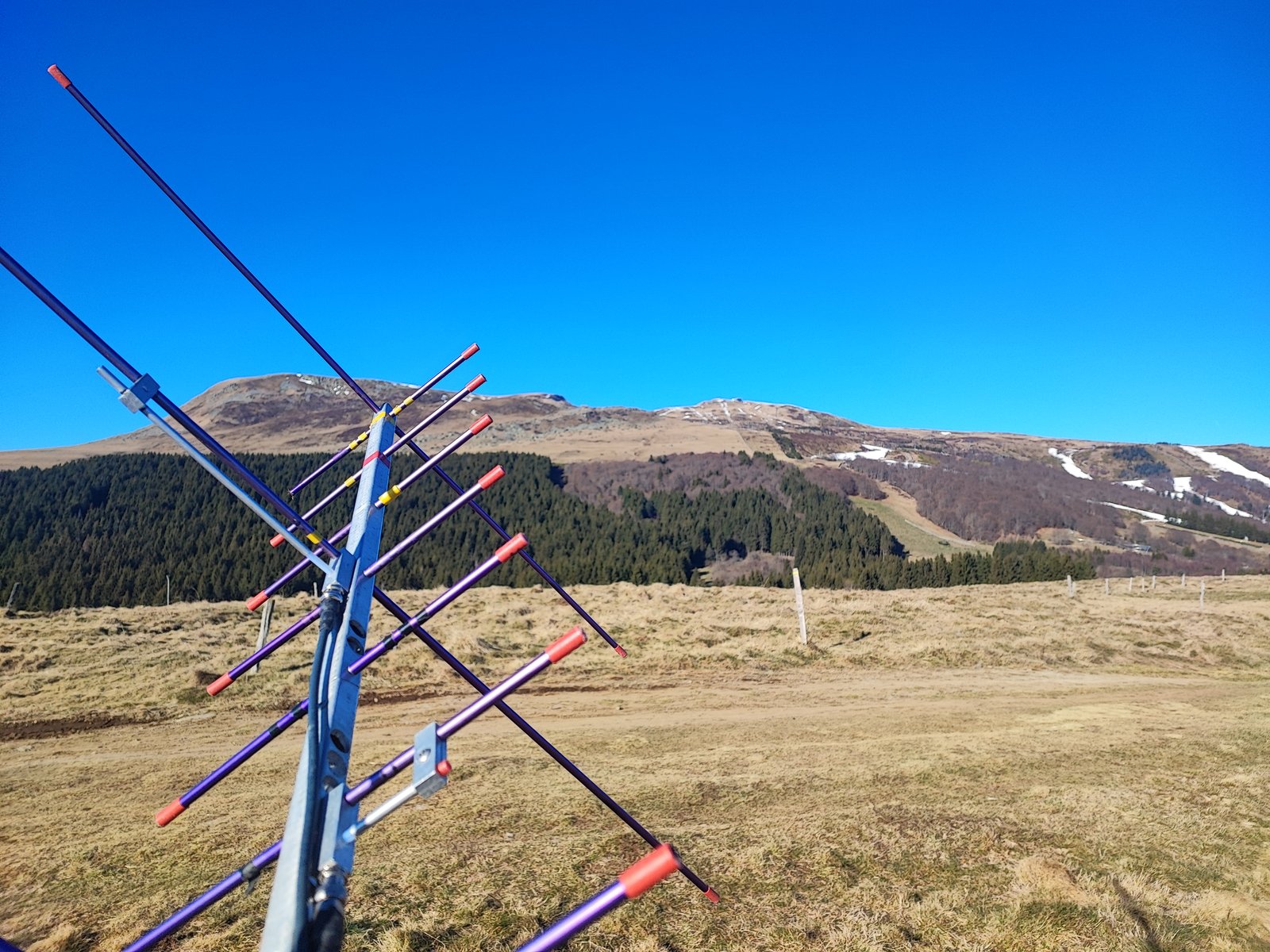
On a terrace facing the hills and the sea, the Yagi in hand, the bag on the shoulder — July 2024From the top of an observation tower above the forest, on 15 June 2025, the day of the JN17DX activationIn a garden, the Yagi pointed at the sky — May 2025On a grassy plateau, the Yagi in hand, with the mountains in the distance — December 2025The crossed Yagi facing the snow-capped mountain — December 2025
F4IOZ/p activations
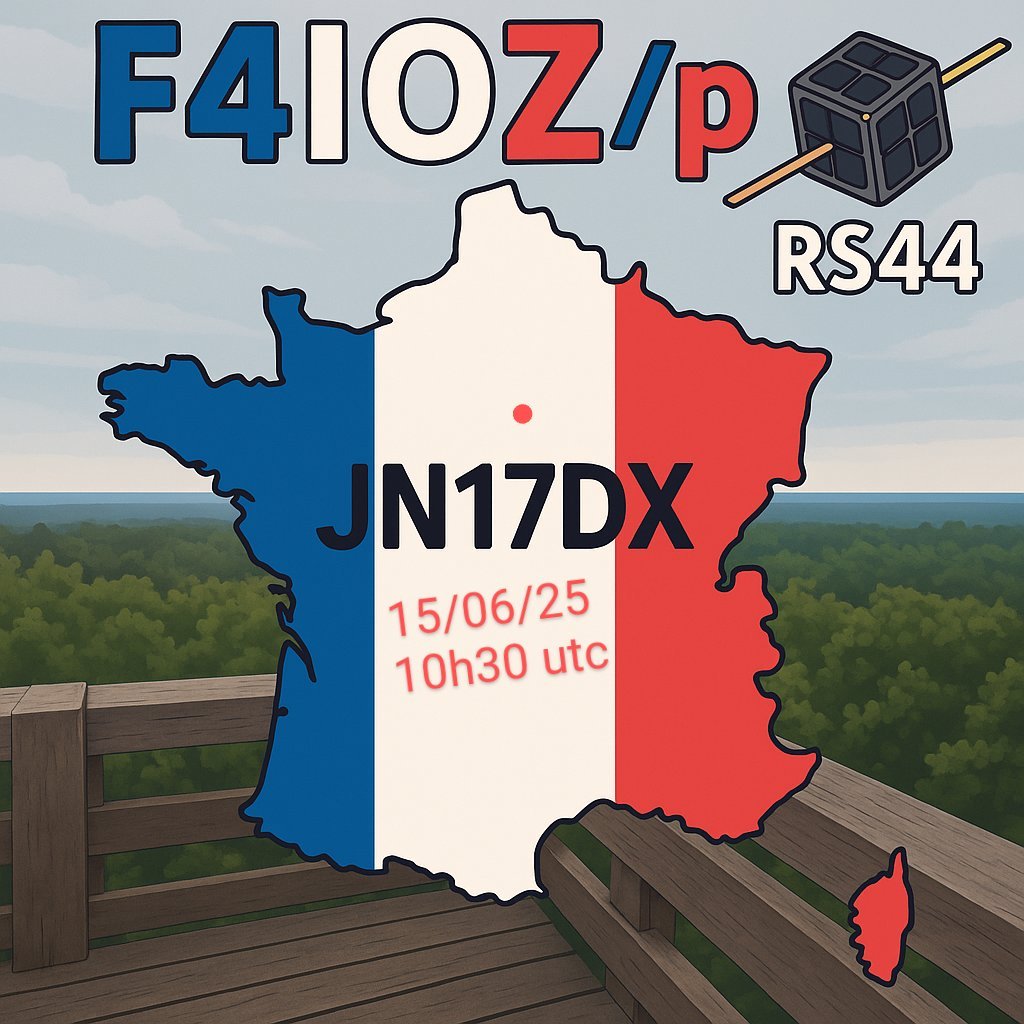
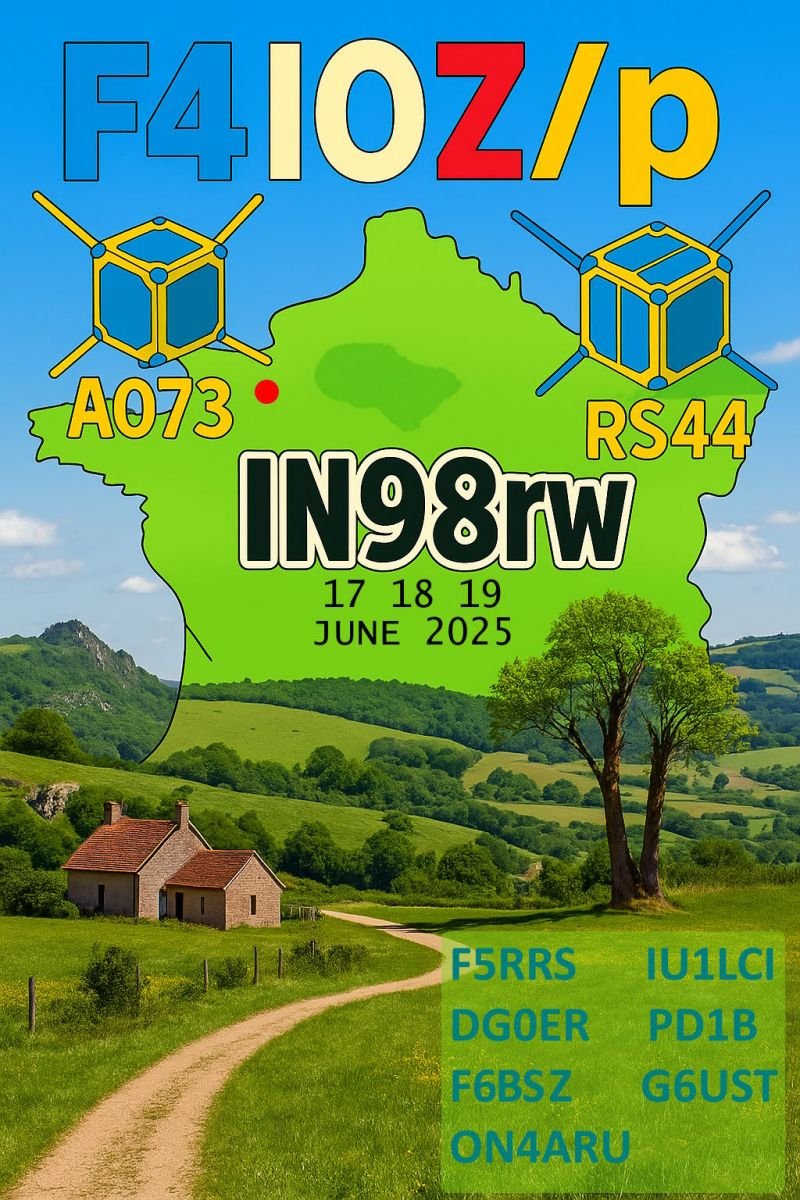
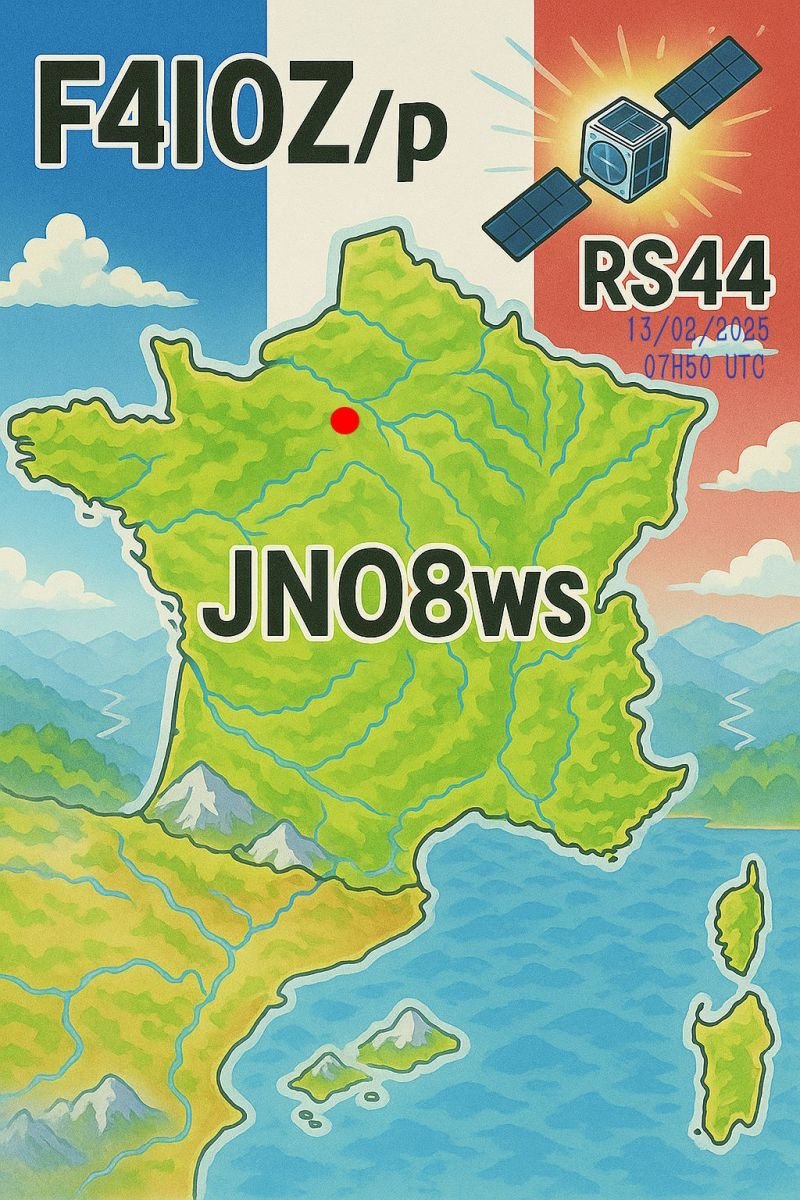
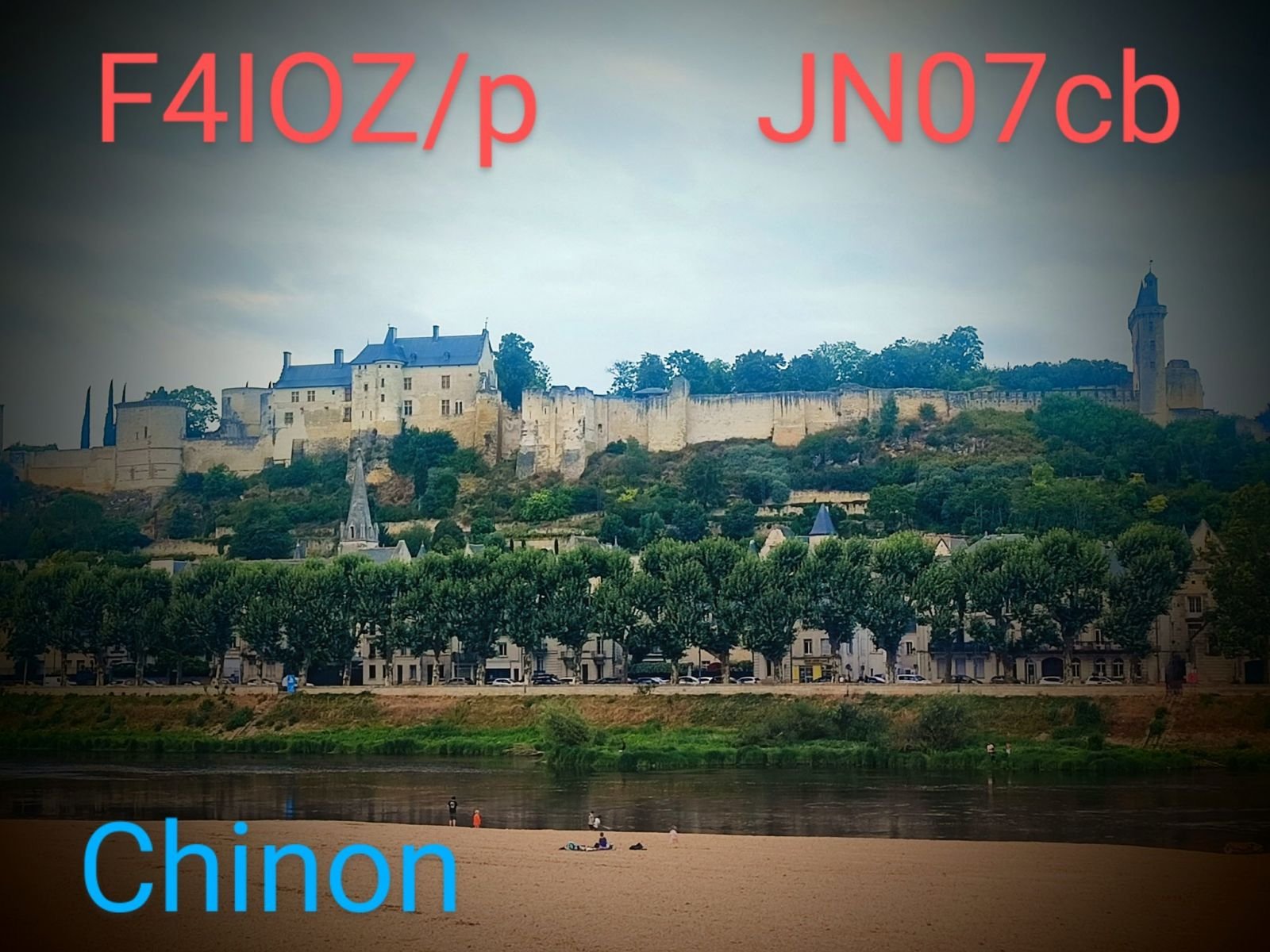
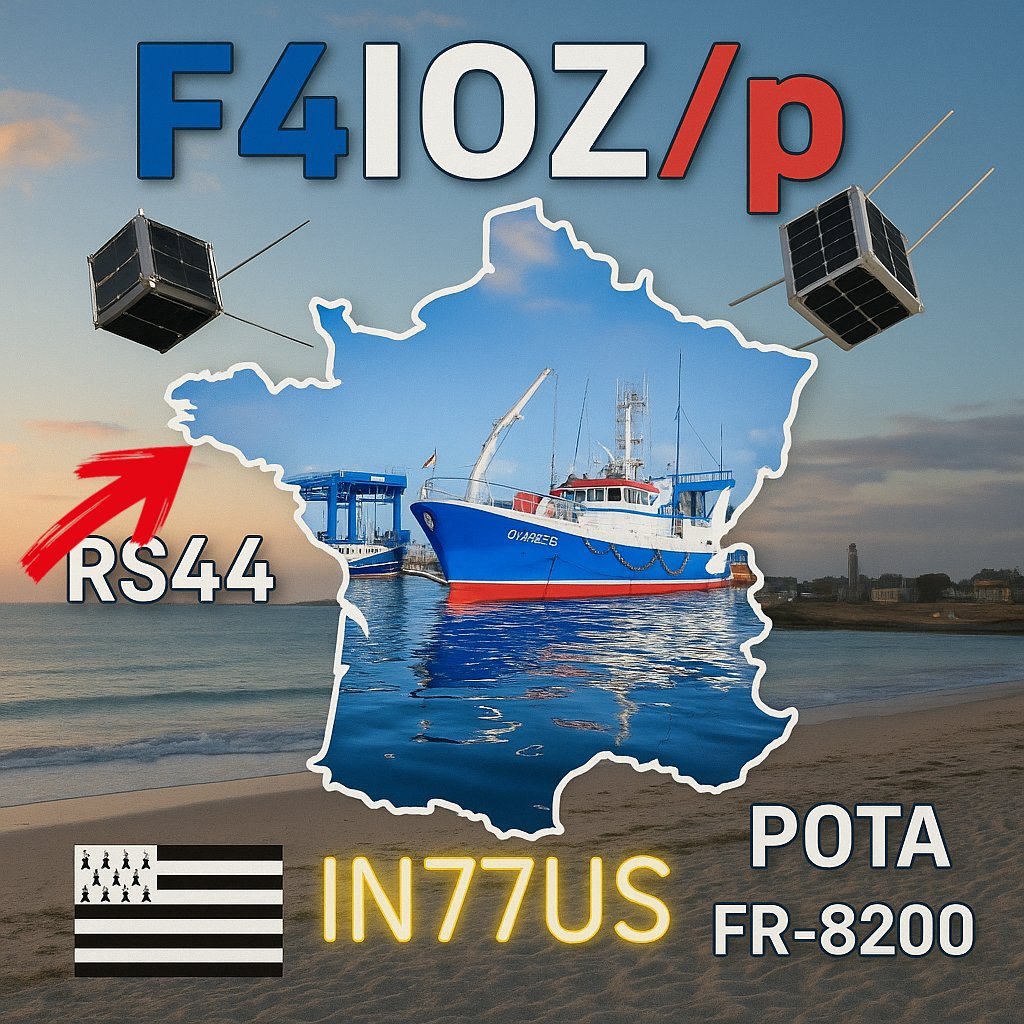
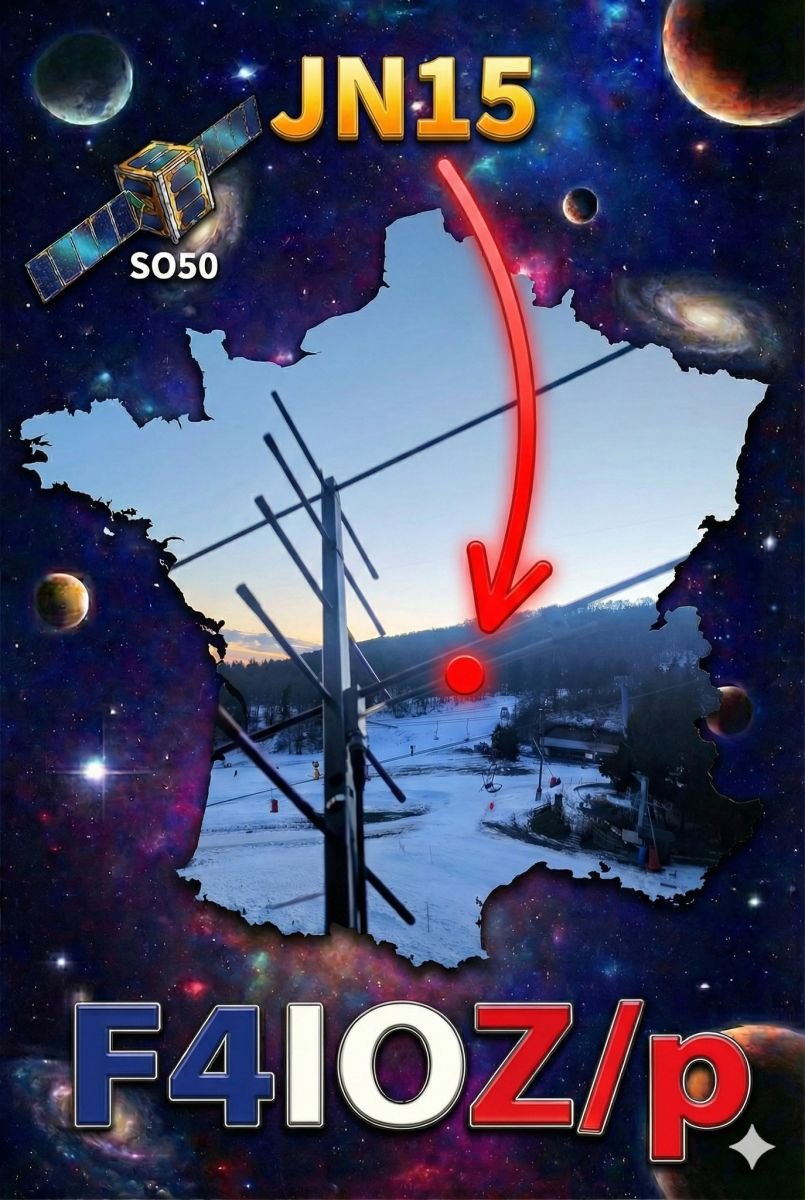
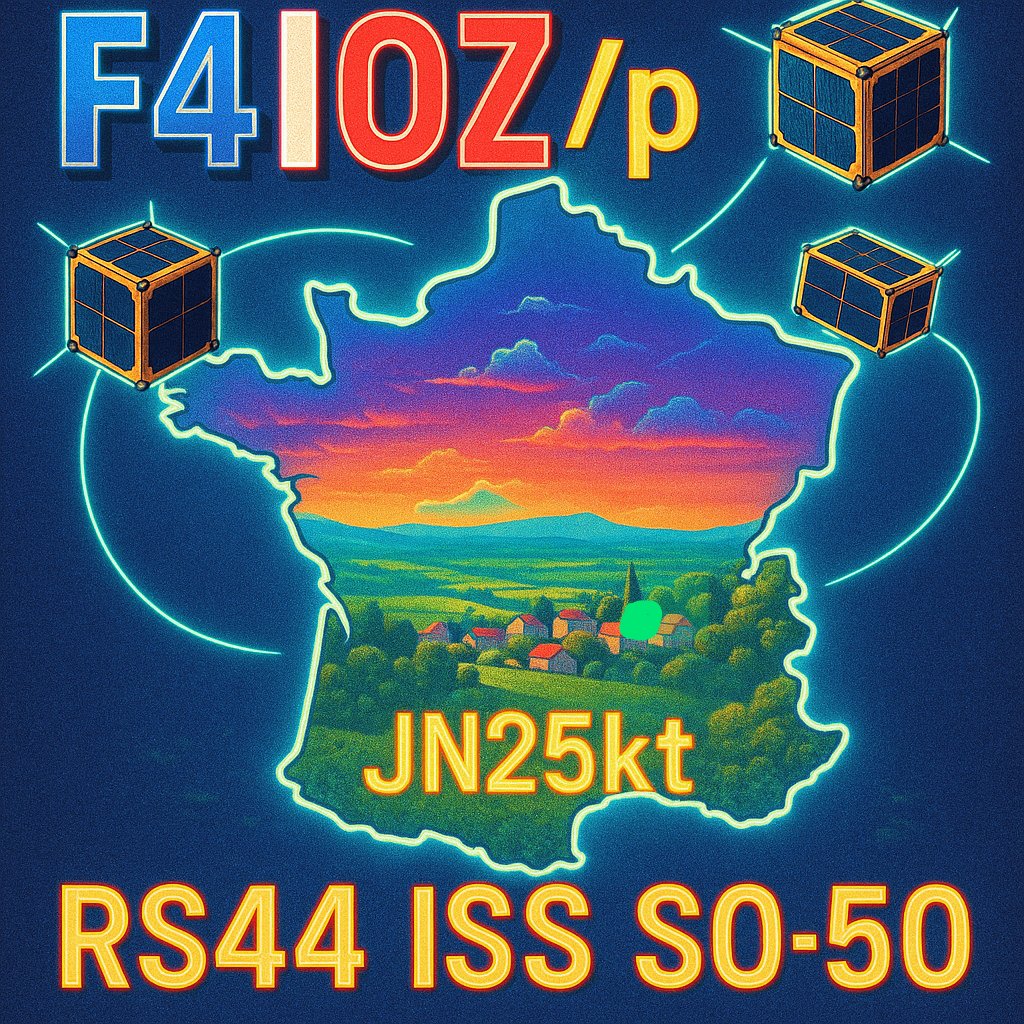
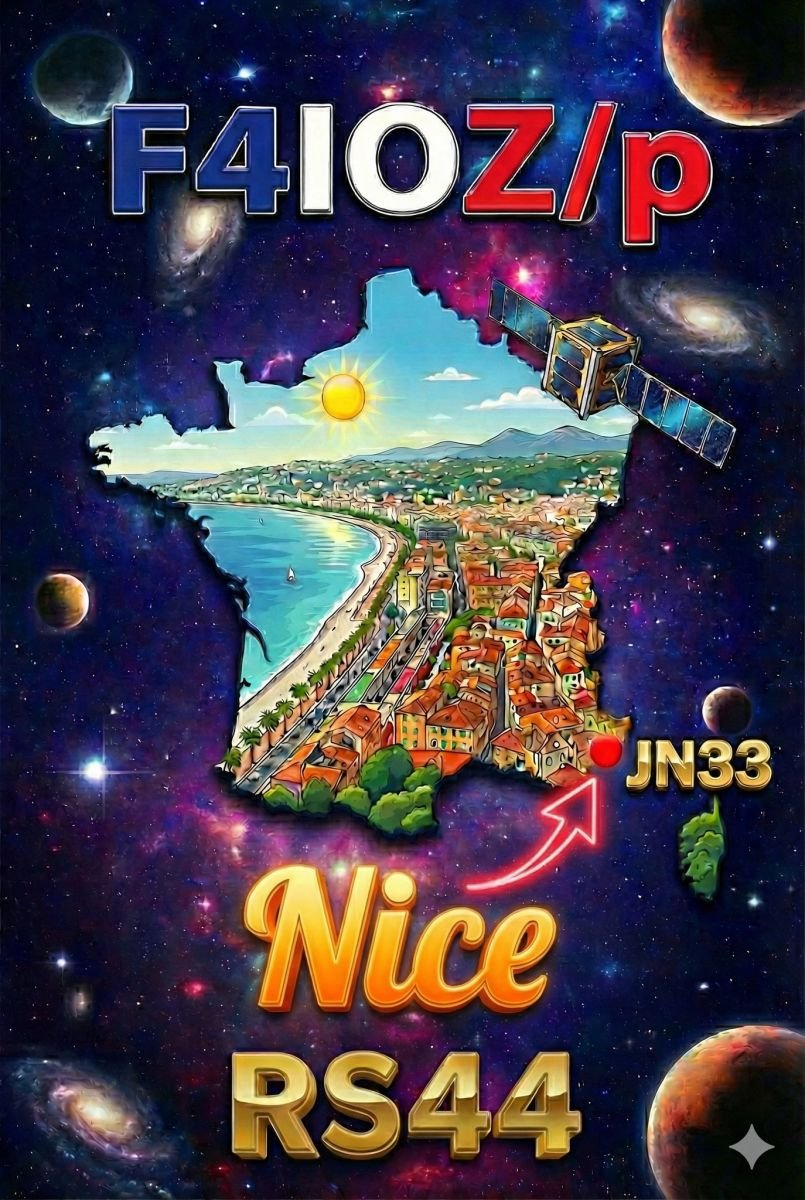
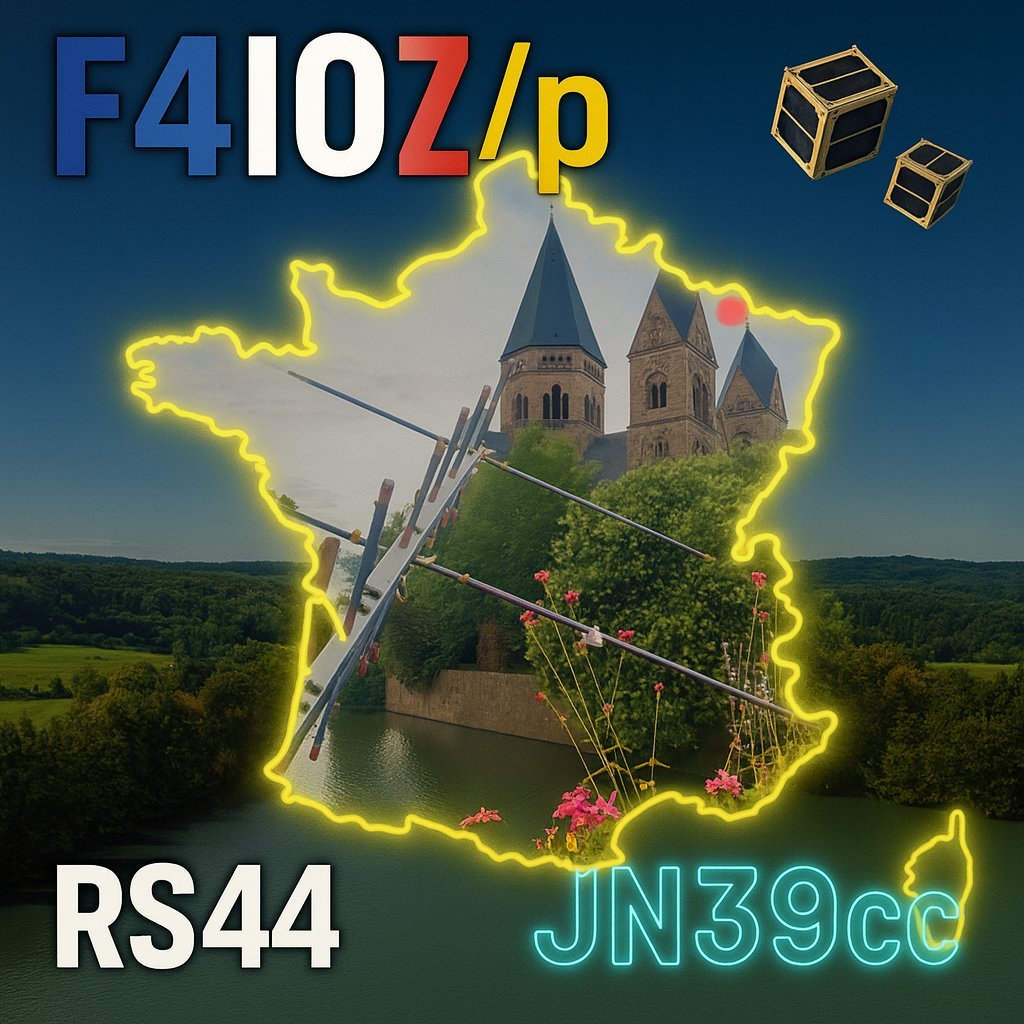
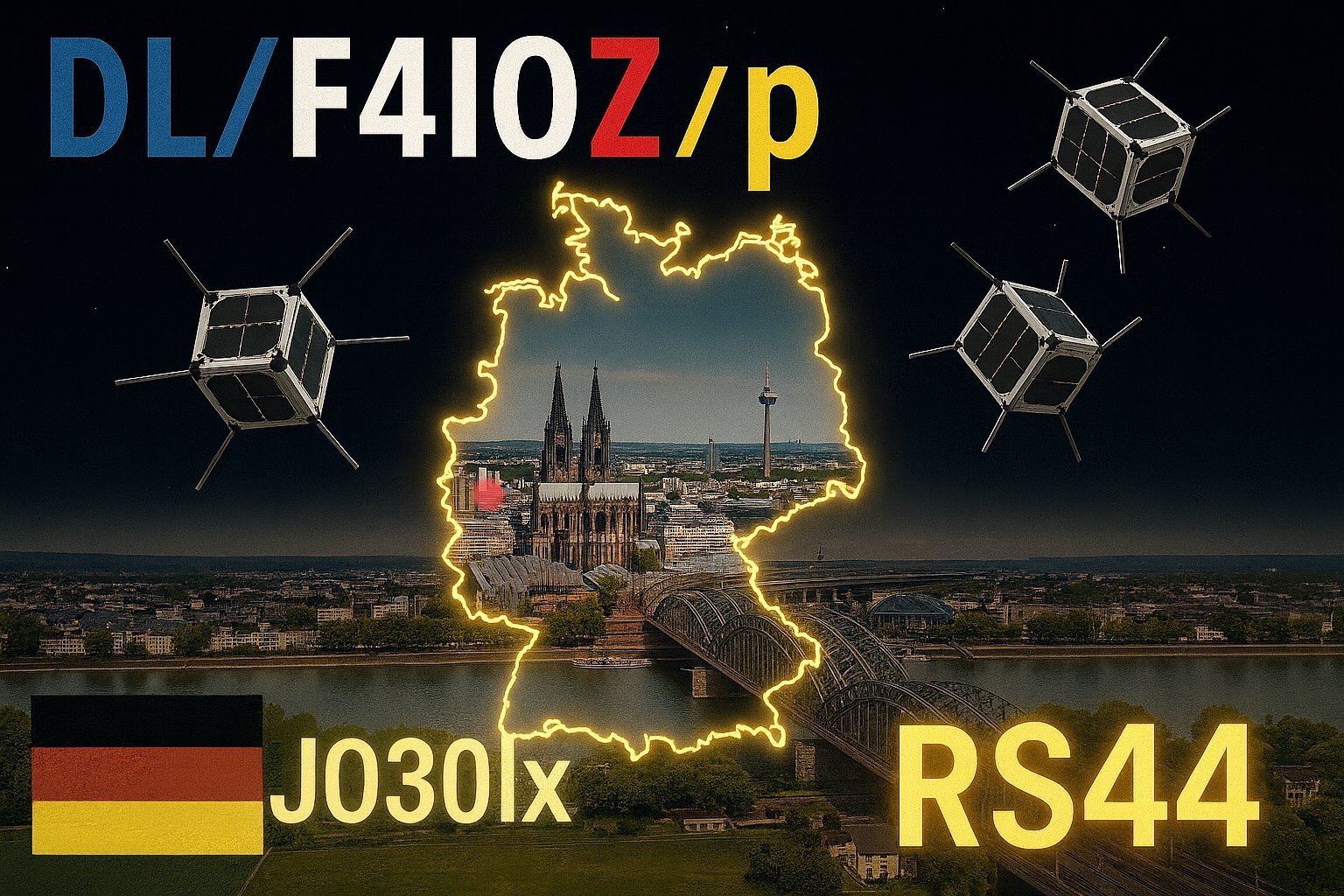
The cards of my portable outings: the square activated, the satellite or satellites, sometimes the date.
F4IOZ/p in JN17DX, RS-44 — 15/06/2025, 10:30 UTCF4IOZ/p in IN98RW, AO-73 and RS-44 — 17, 18 and 19 June 2025F4IOZ/p in JN08WS, RS-44 — 13/02/2025, 07:50 UTCF4IOZ/p in JN07CB, at ChinonF4IOZ/p in IN77US, in Brittany, RS-44 — POTA FR-8200F4IOZ/p in JN15, SO-50F4IOZ/p in JN25KT, RS-44, ISS and SO-50F4IOZ/p in JN33, in Nice, RS-44F4IOZ/p in JN39CC, RS-44DL/F4IOZ/p in JO30LX, in Germany, RS-44
Antennas: G5RV, and an antenna on a 49:1 transformer.
The Brick2 is linked to the site: its spectrum and its waterfall are on the HF SDR station page, reserved for the operator.
SatMe
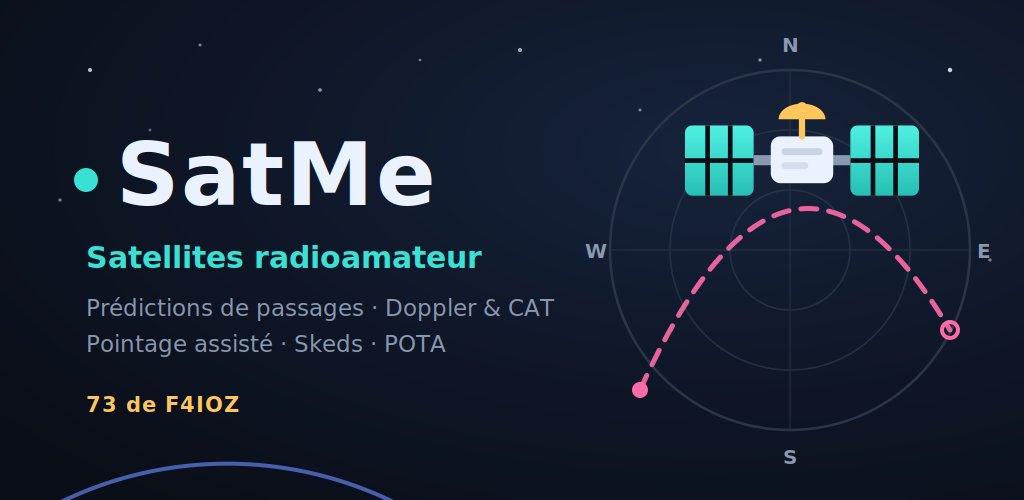
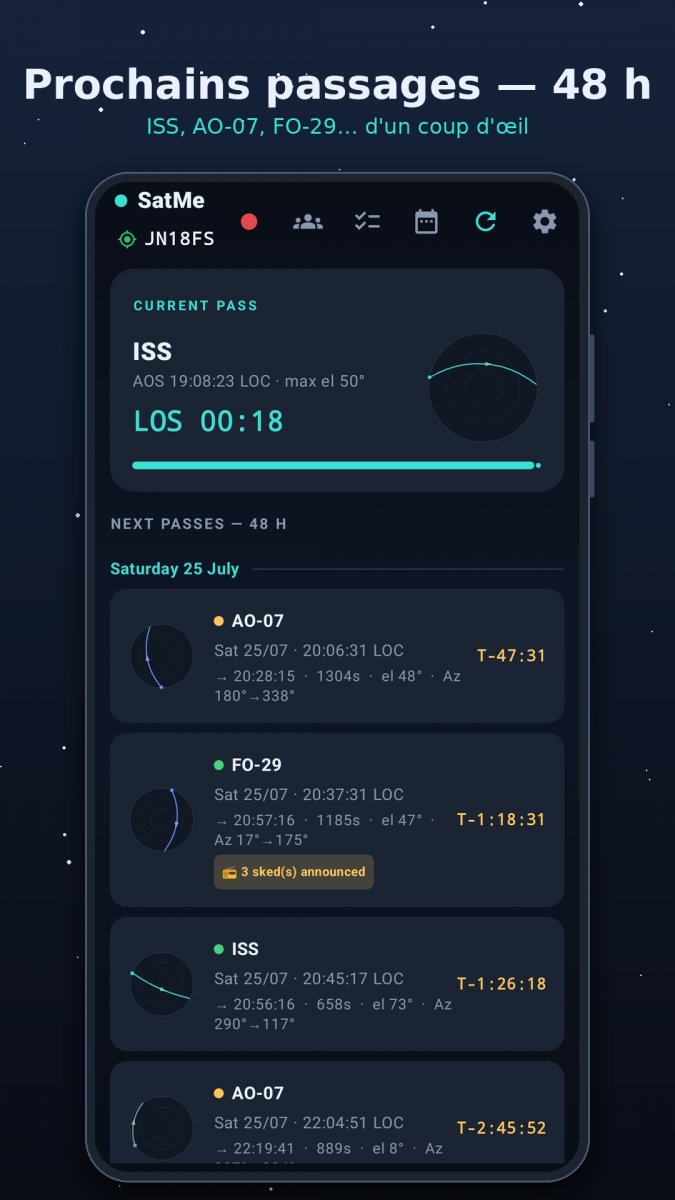
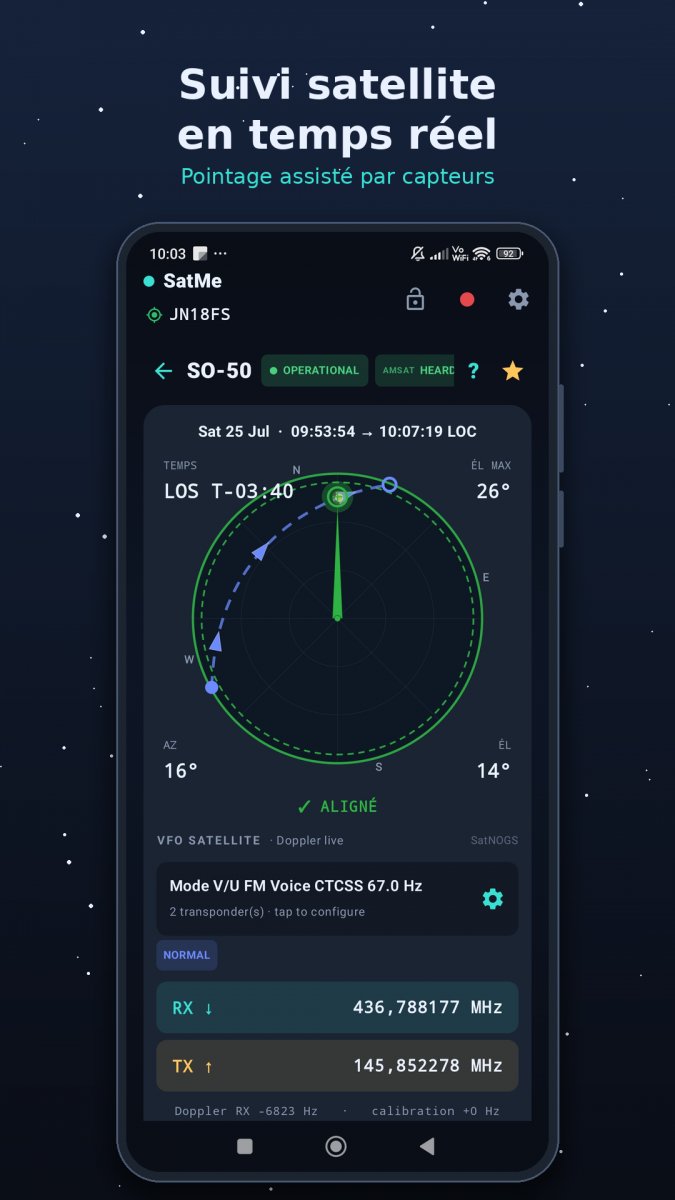
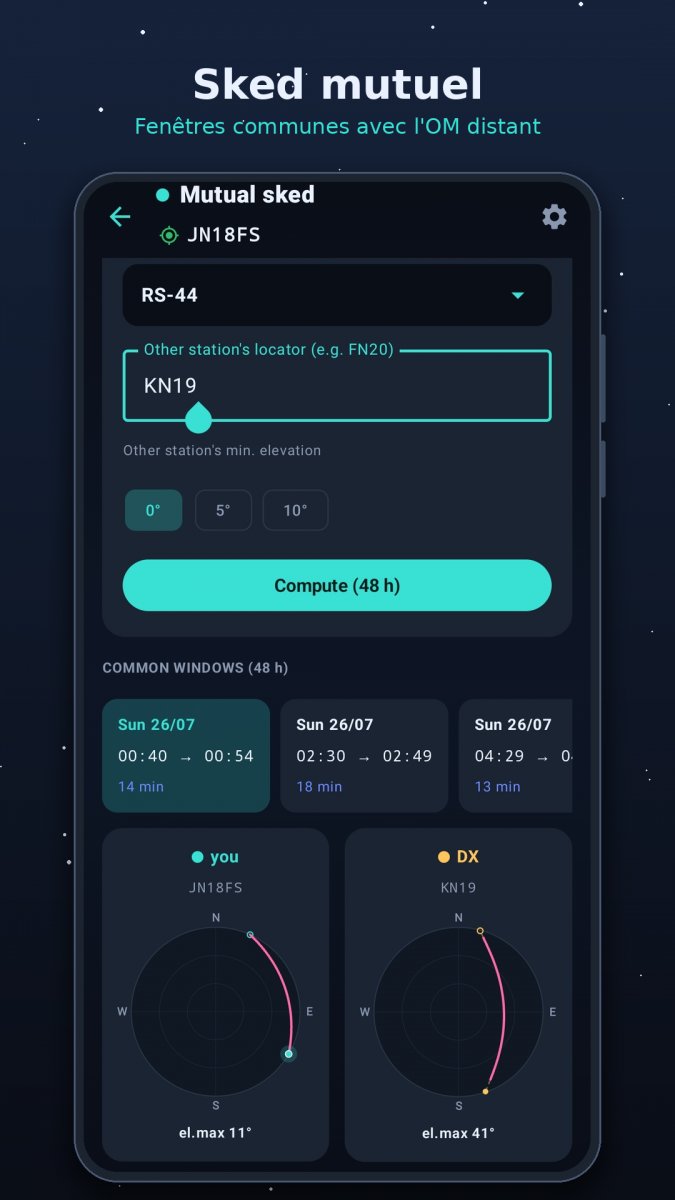
SatMe is the amateur radio satellite tracking application I develop: the next passes over 48 hours, real-time tracking with pointing assisted by the phone's sensors, Doppler and CAT, mutual skeds with a distant ham, POTA. On the phone, on the PC and at the foot of the tower.
SatMe, amateur radio satellites: pass predictions, Doppler and CAT, assisted pointing, skeds, POTASatMe: the next passes over 48 hours, at a glanceSatMe: tracking a satellite in real time, pointing assisted by the phone's sensorsSatMe: the mutual sked, the common windows with the distant ham